These terminals were not bought in and repainted. Here they are as drawings, opened up, photographed on the factory floor — and finally as they arrive on site.
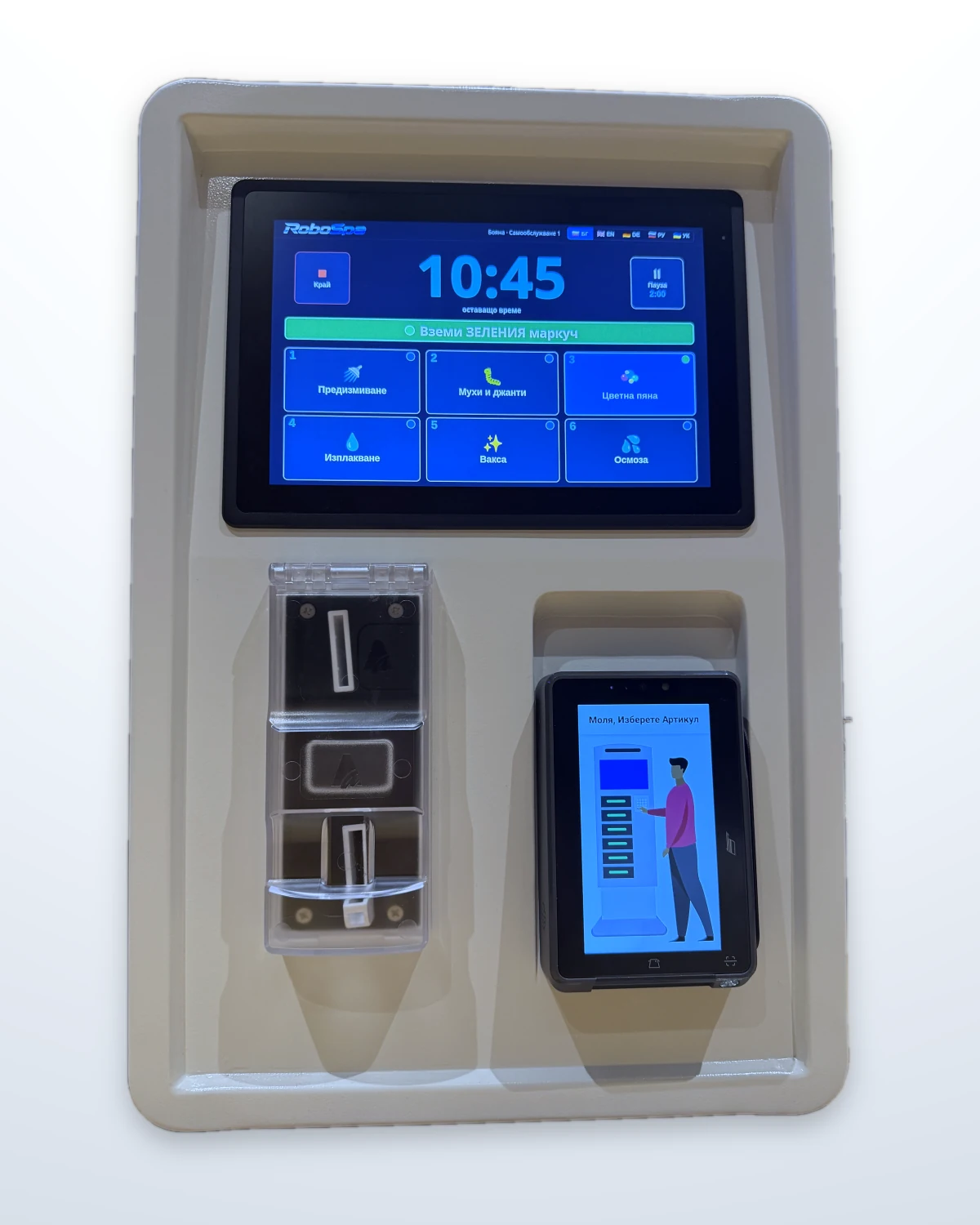
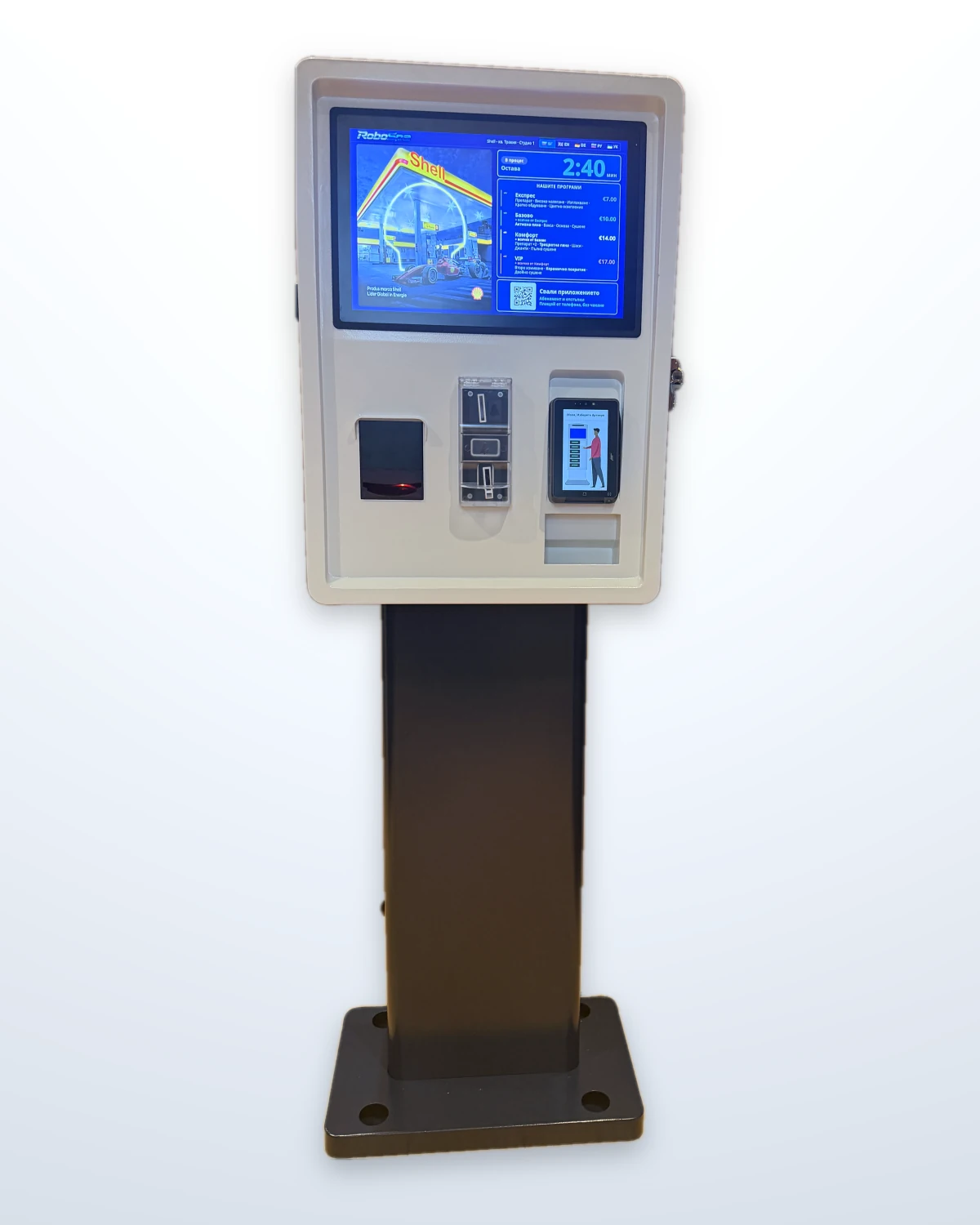
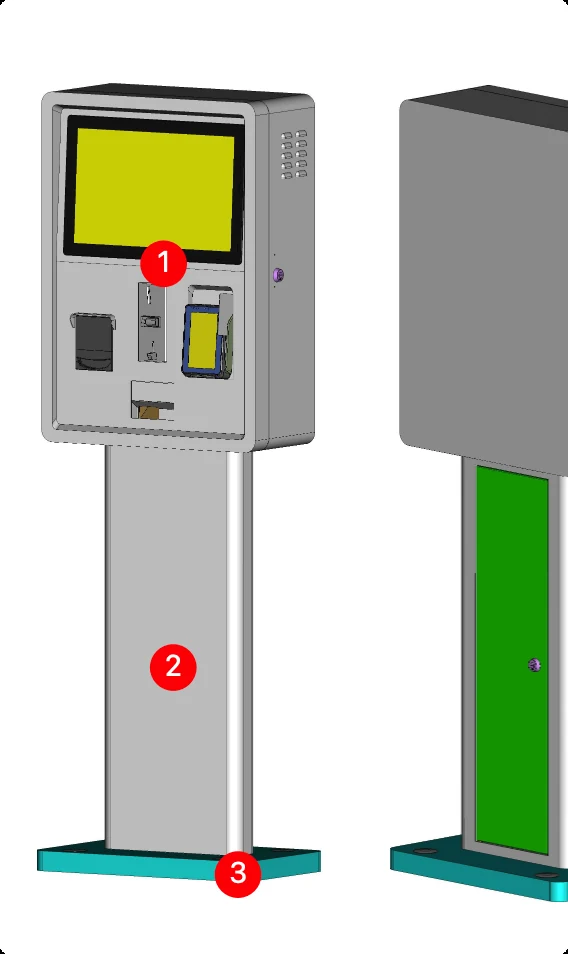
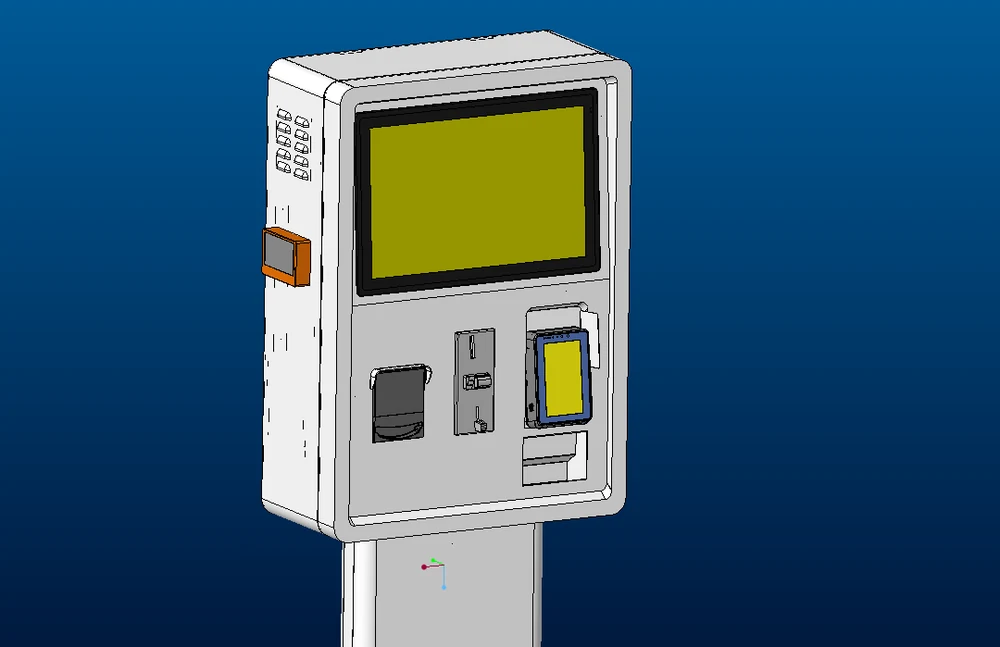
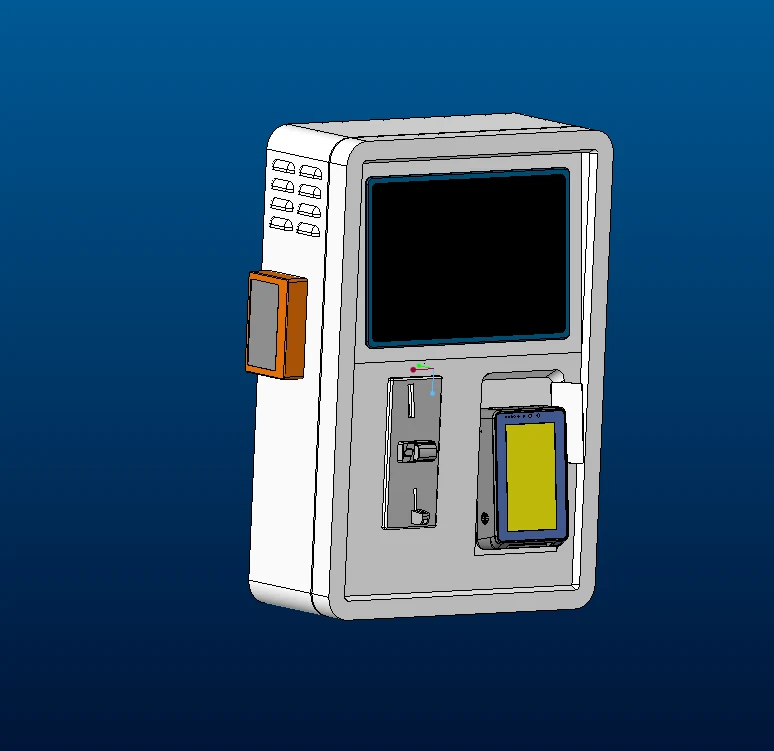
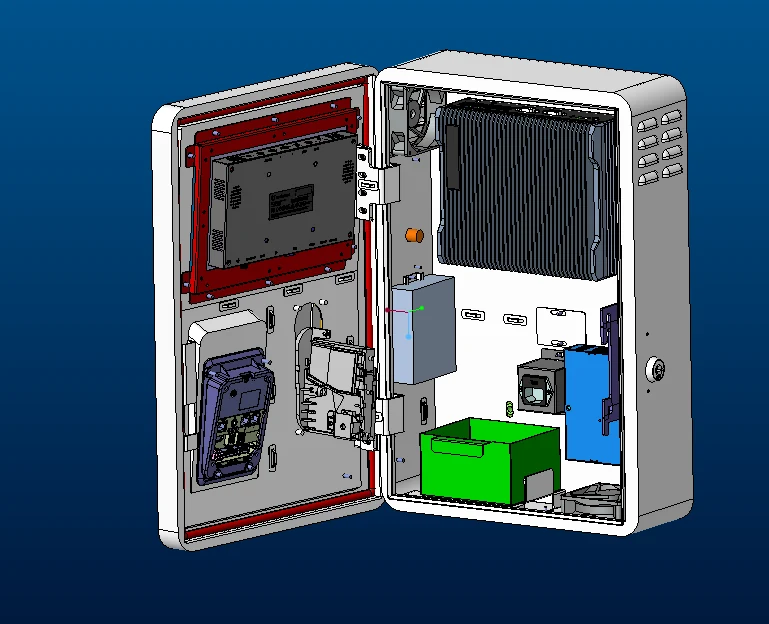
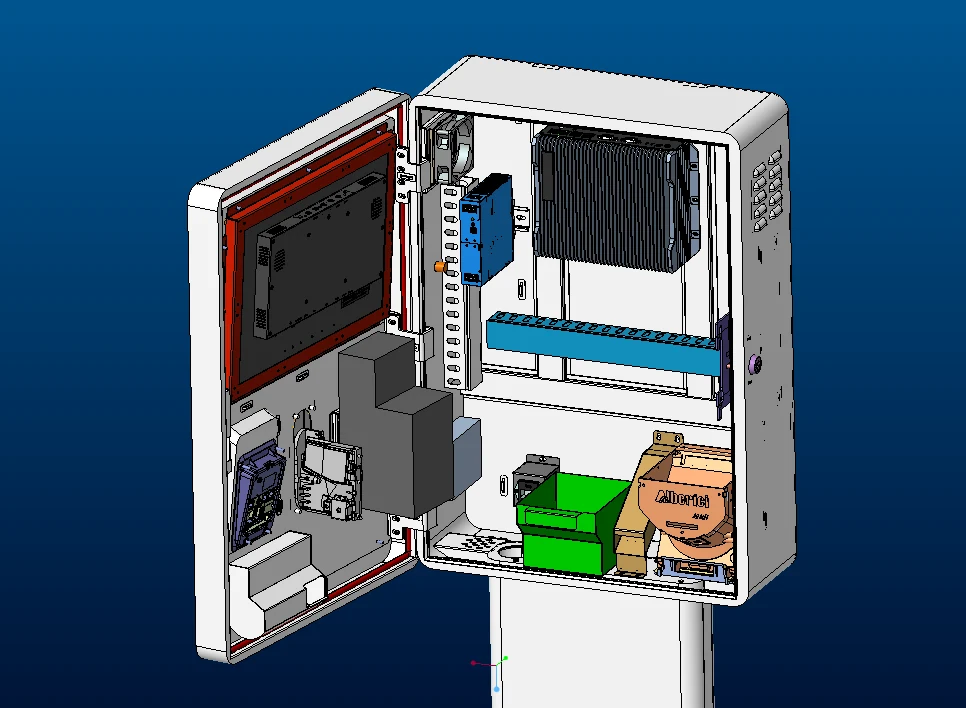
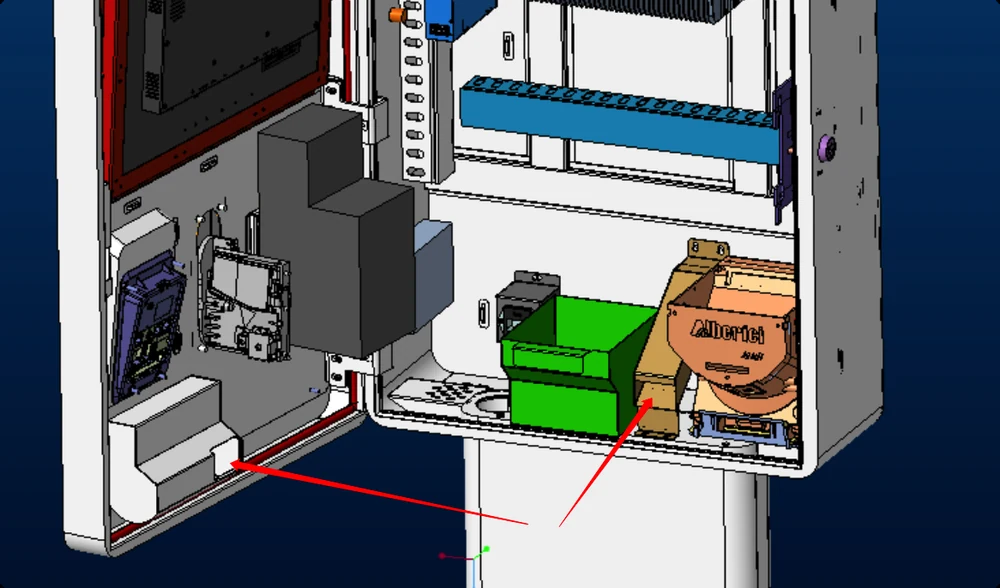
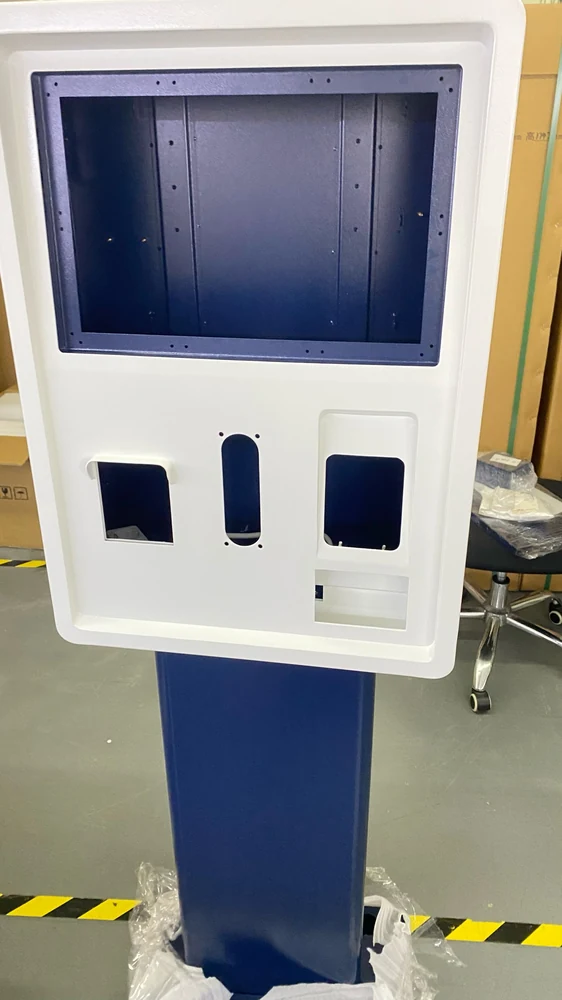
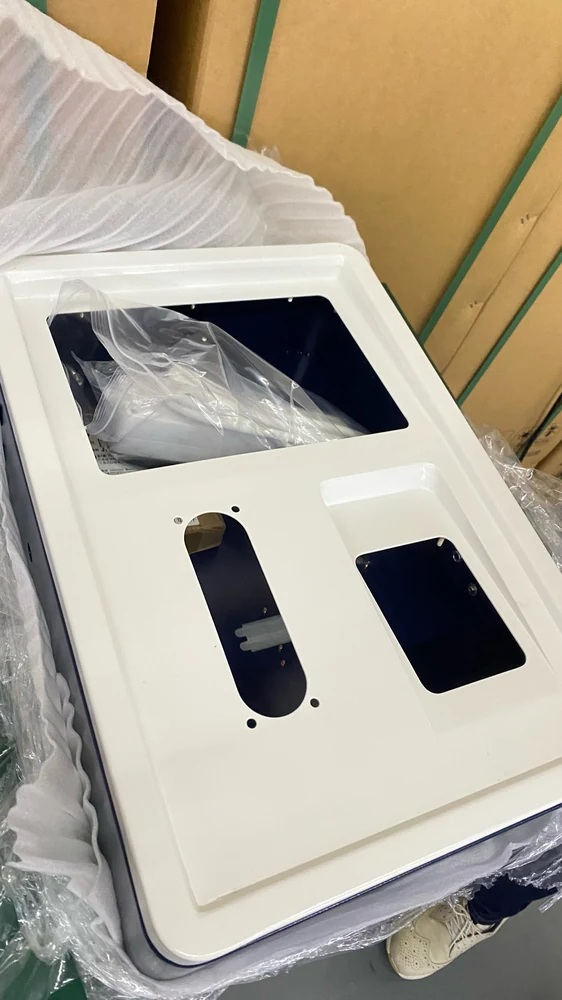
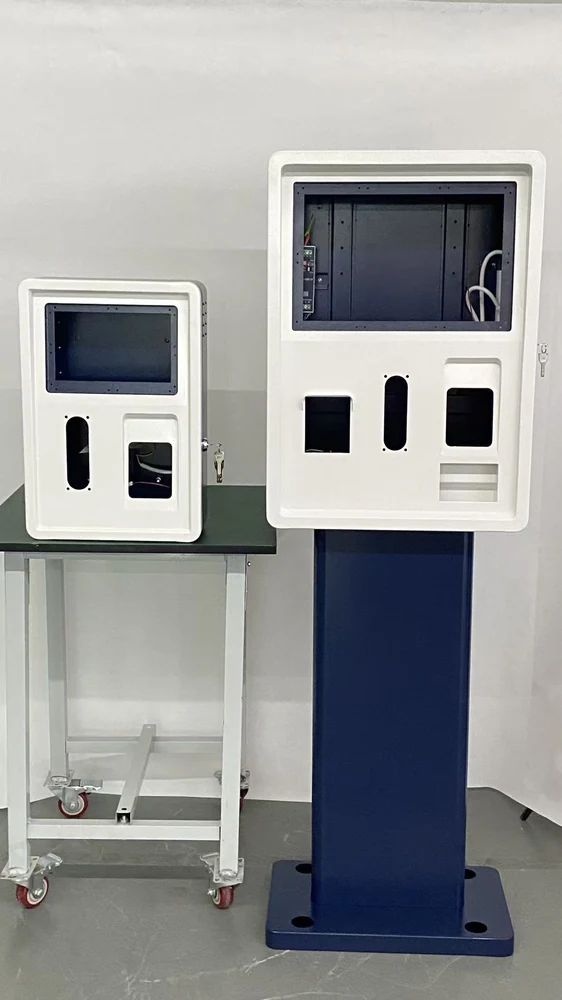
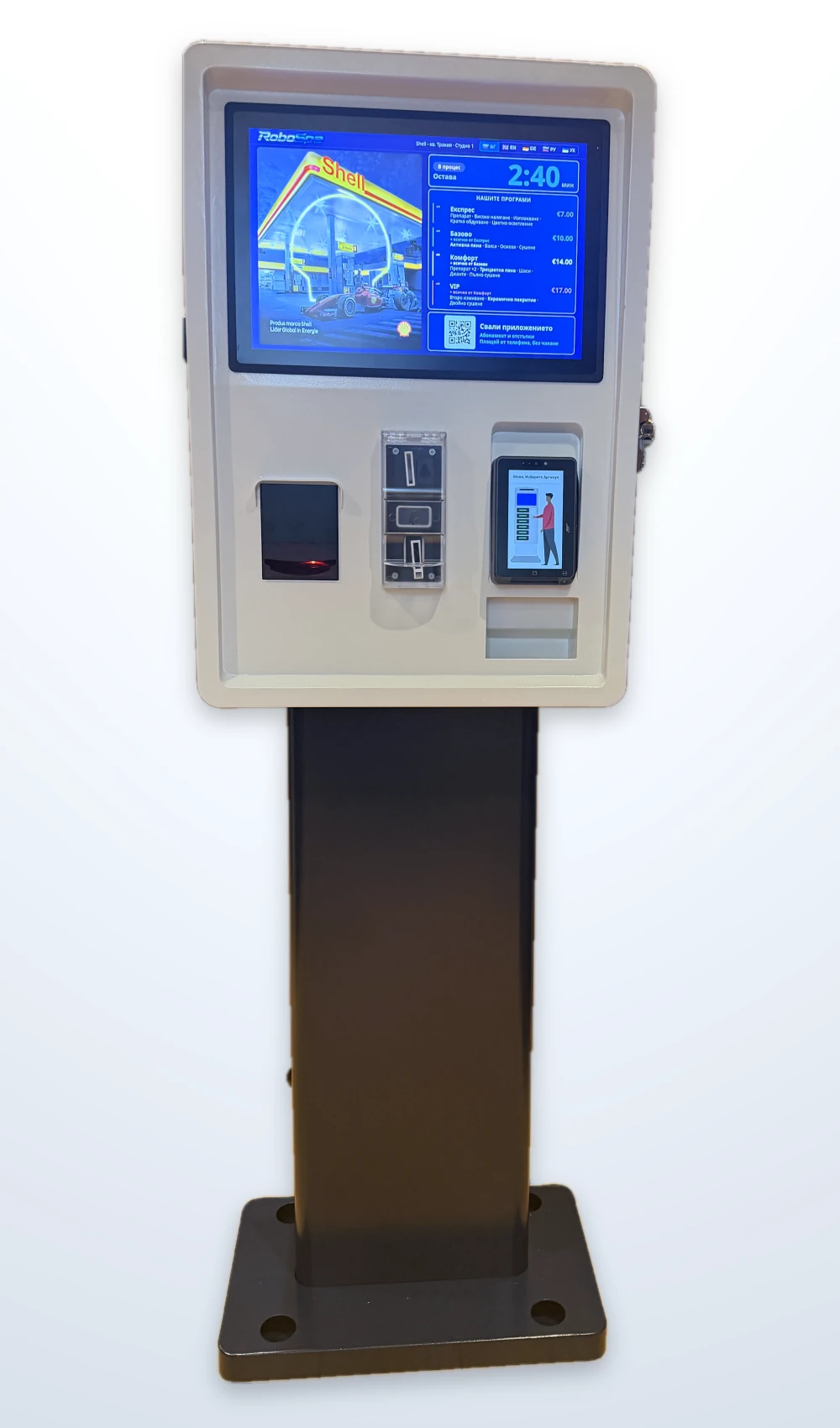
The large terminal as a drawing — front and back, with the pedestal and the anchor plate.The same housing, closed. On the side sits the reader that takes a card or a ticket without the driver getting out.The compact one — the same family in a smaller body, for recessing into a wall or a column.The compact, opened: screen and POS sit on the door; the computer and the power supply sit in the body.The large one, opened: coin and note acceptors on the door; the note box and the change hopper down below, where a key reaches them.Up close, where the arrows point: the note box and the hopper that returns the change. A key reaches both without taking anything apart.The pedestal housing before the first module goes in. The cutouts are made for exactly these components.The compact housing as it comes off the line.The two housings side by side — the difference in size reads best this way.The finished machine: white face, navy flanks, on its own pedestal. This is where the housing from the earlier frames ended up.