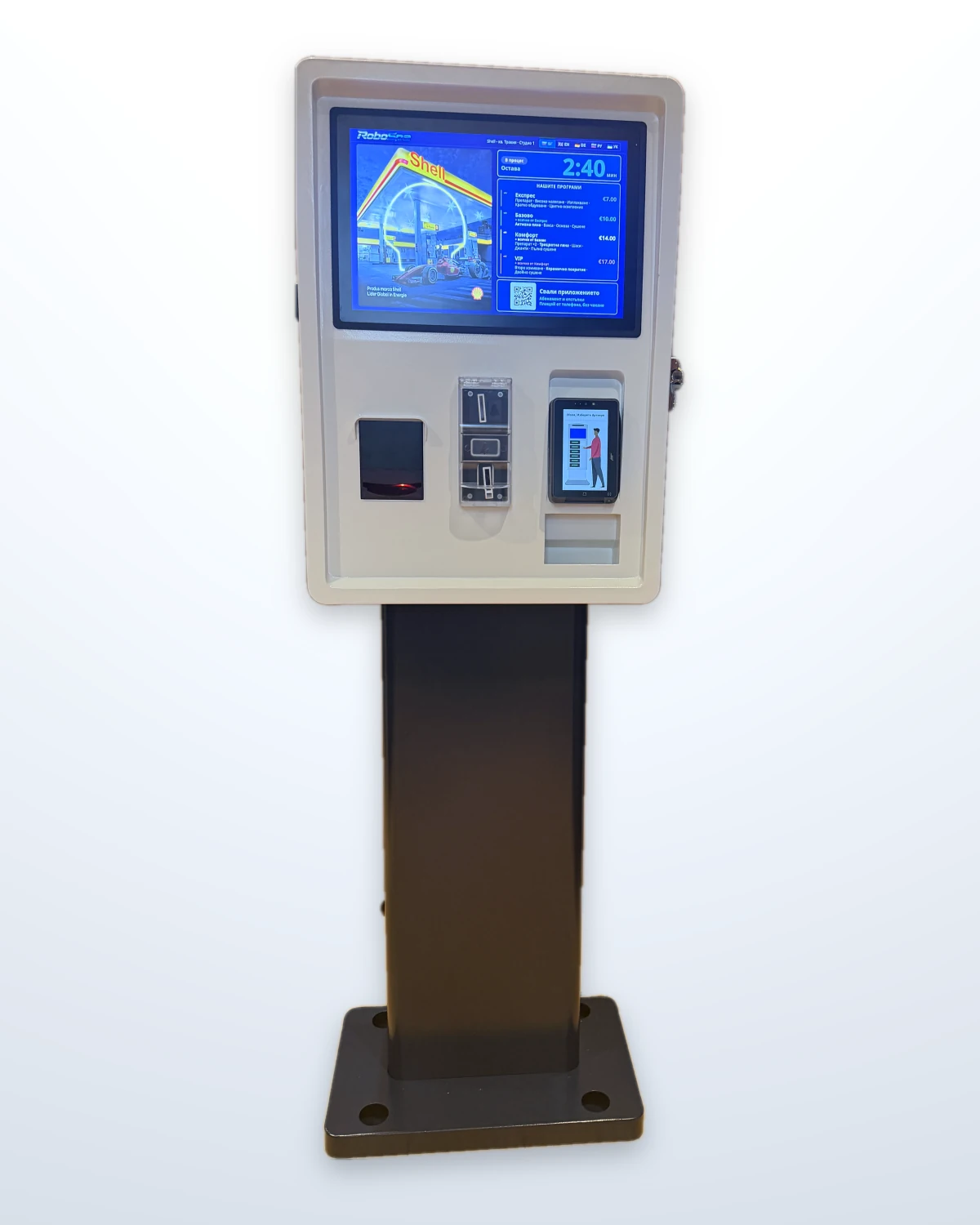
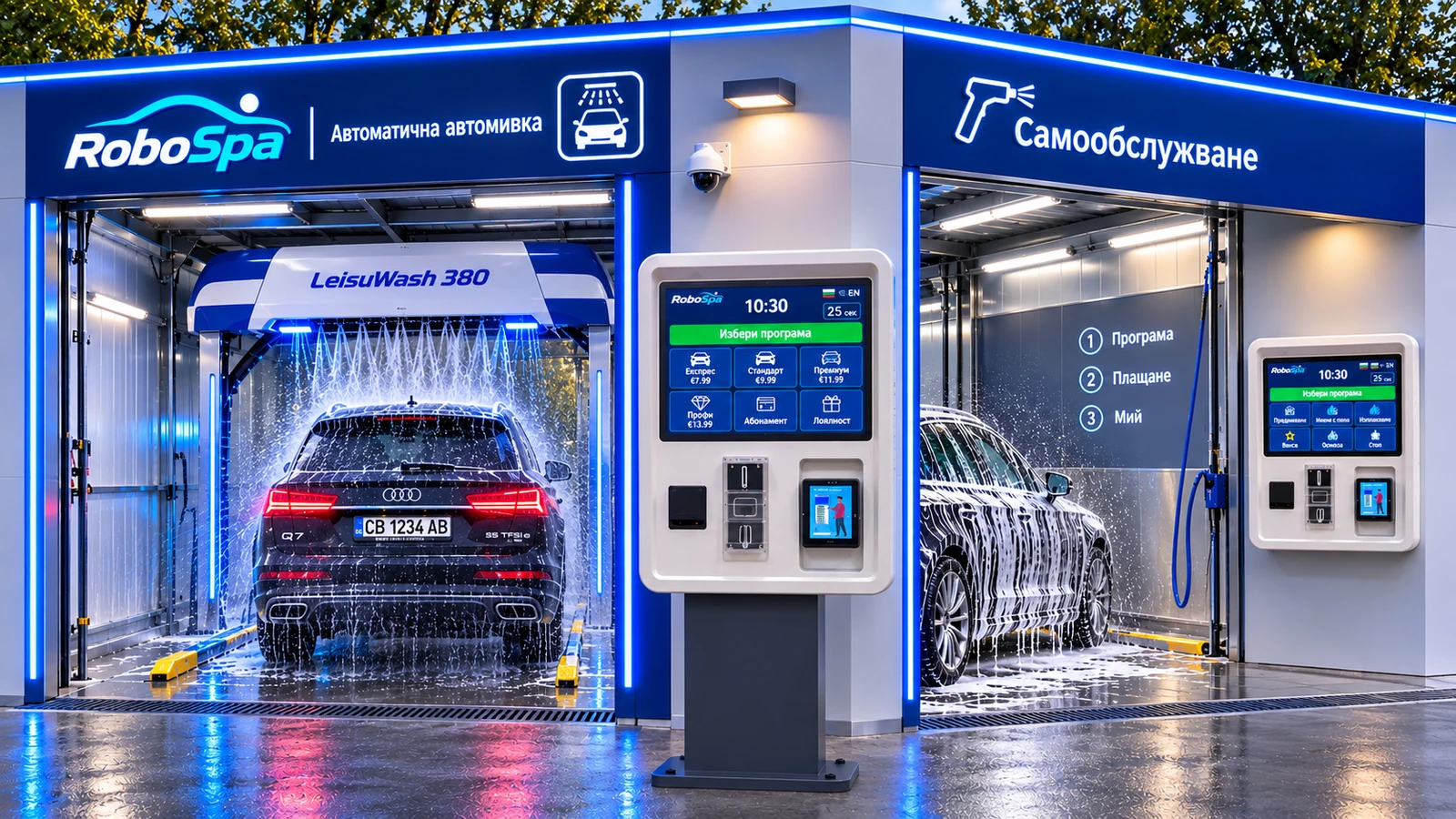
The terminal sells the wash and starts it: picks a programme, takes the money, tells the machine to go and prints a receipt. It drives an automatic gantry, timed self-service bays and vacuums, and the driver pays by card, in cash or from their phone.
Starts a programme on a gantry, counts minutes on self-service and vacuums, and takes subscriptions and loyalty. The camera recognises the car and offers the programme it bought last time.
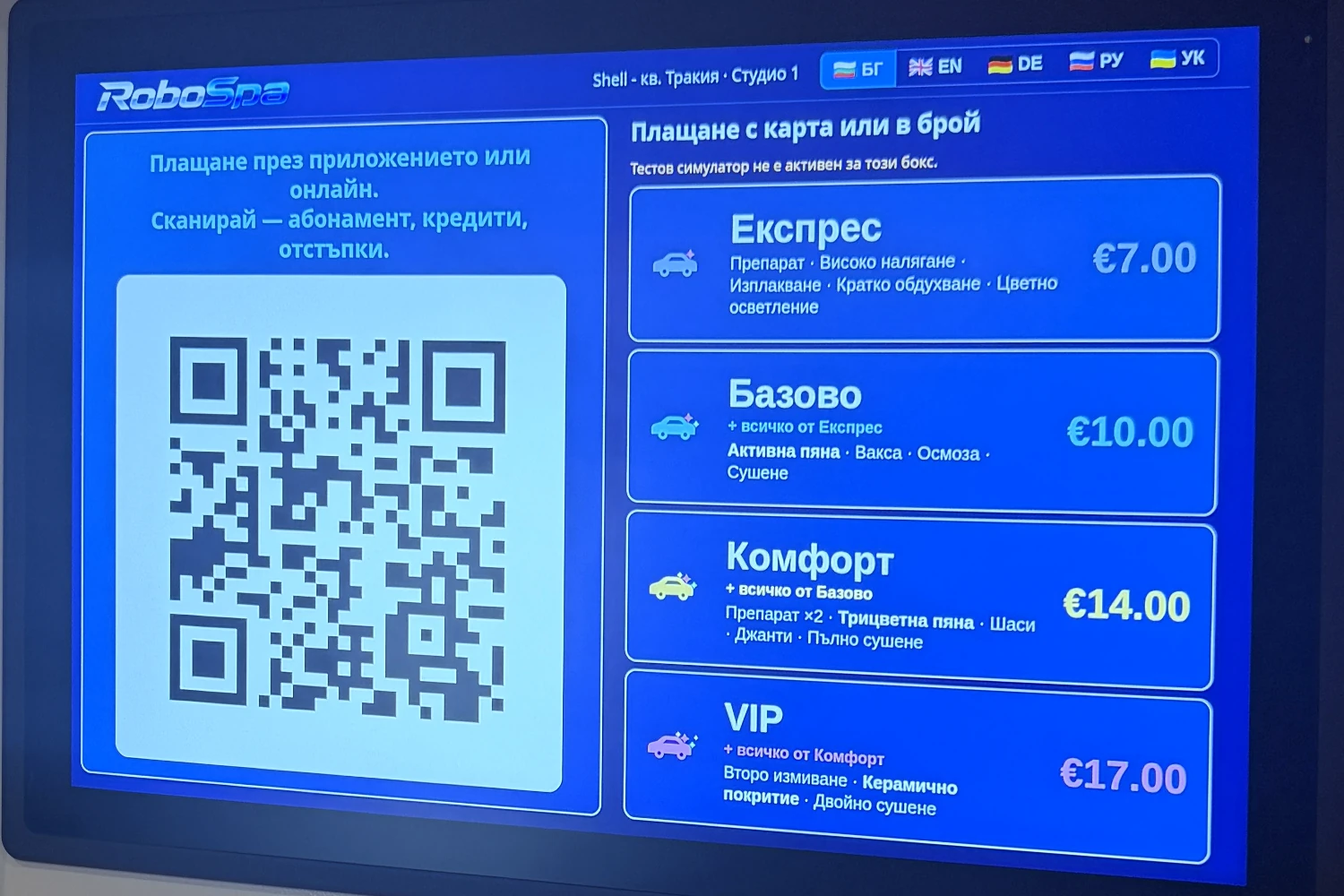
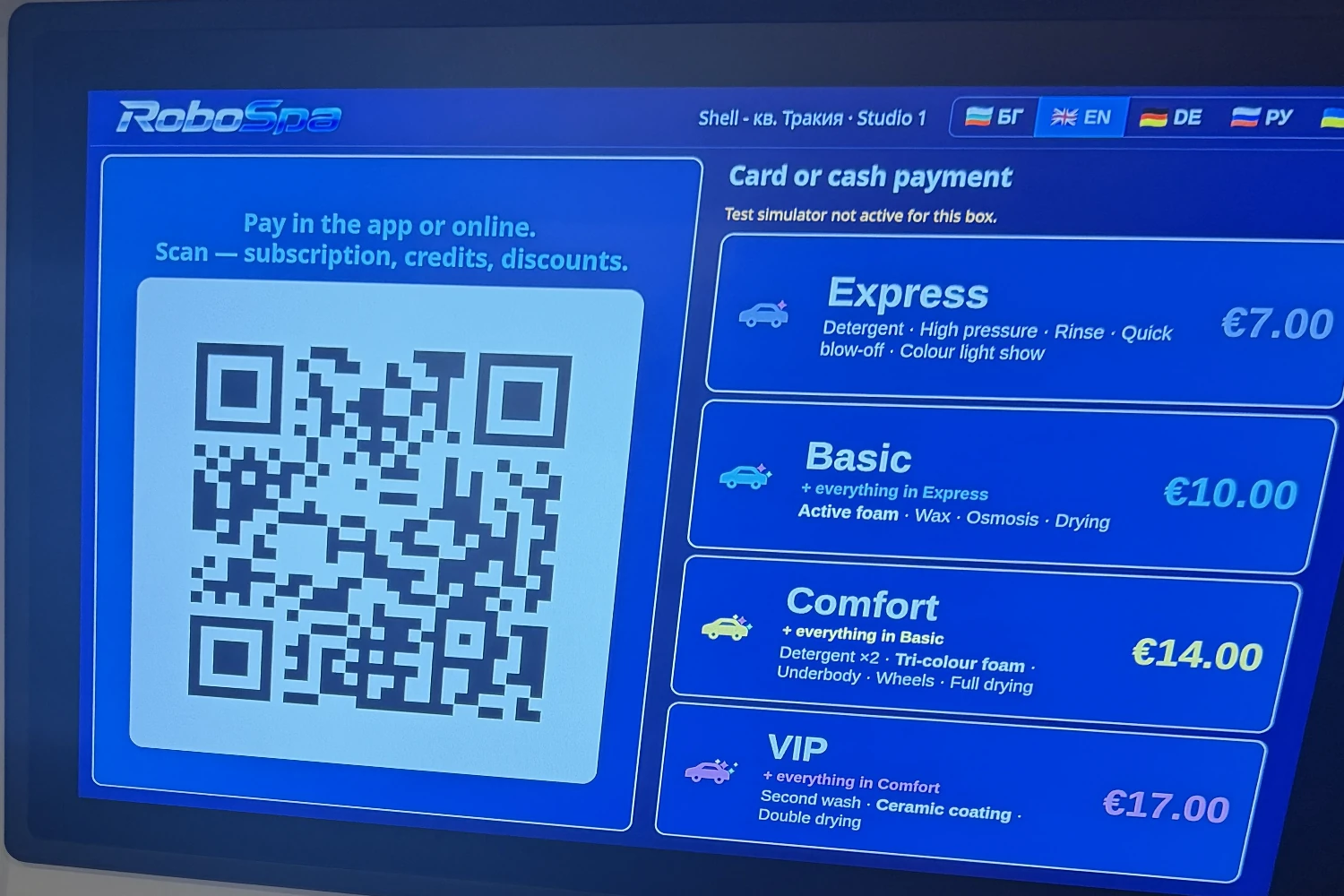
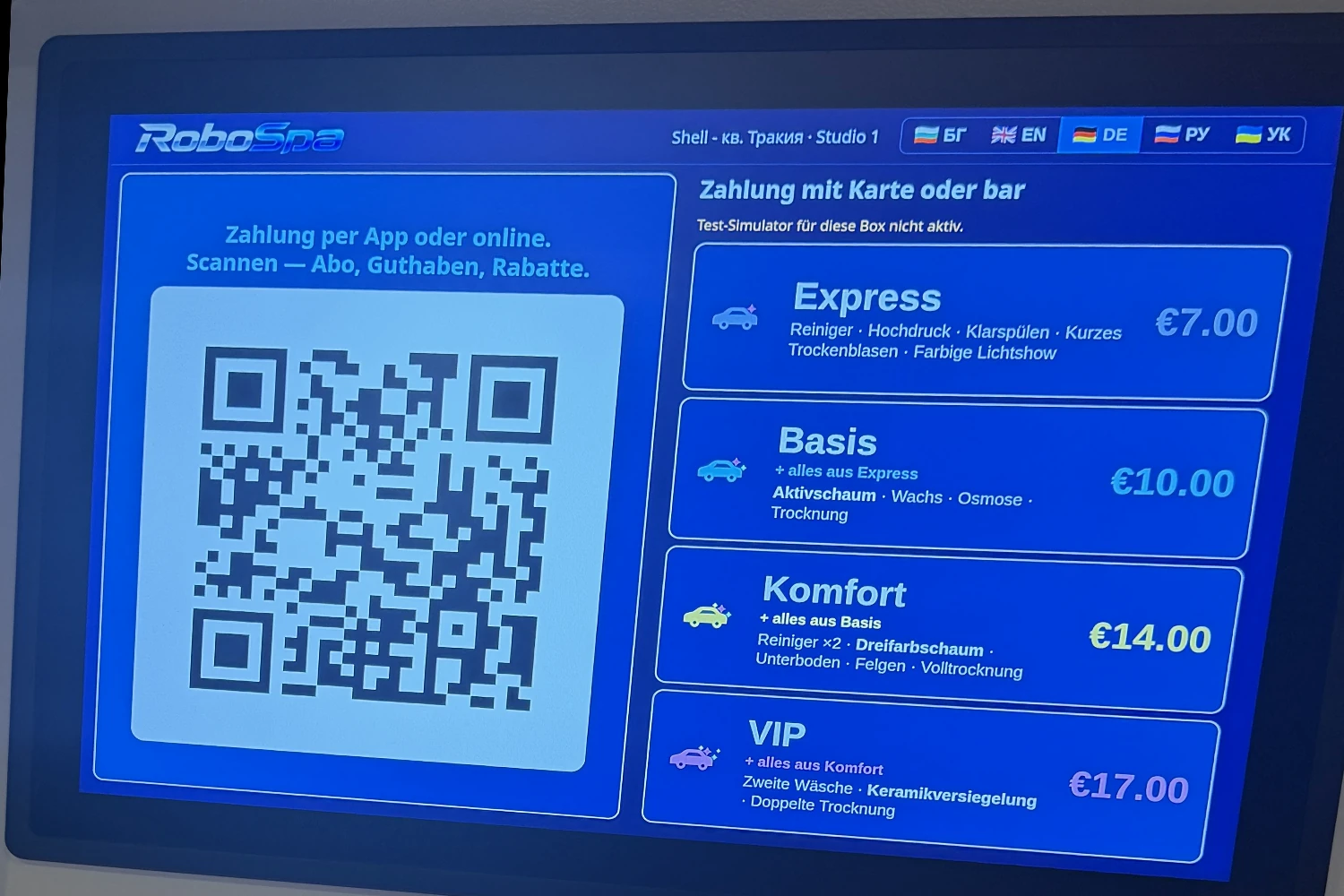
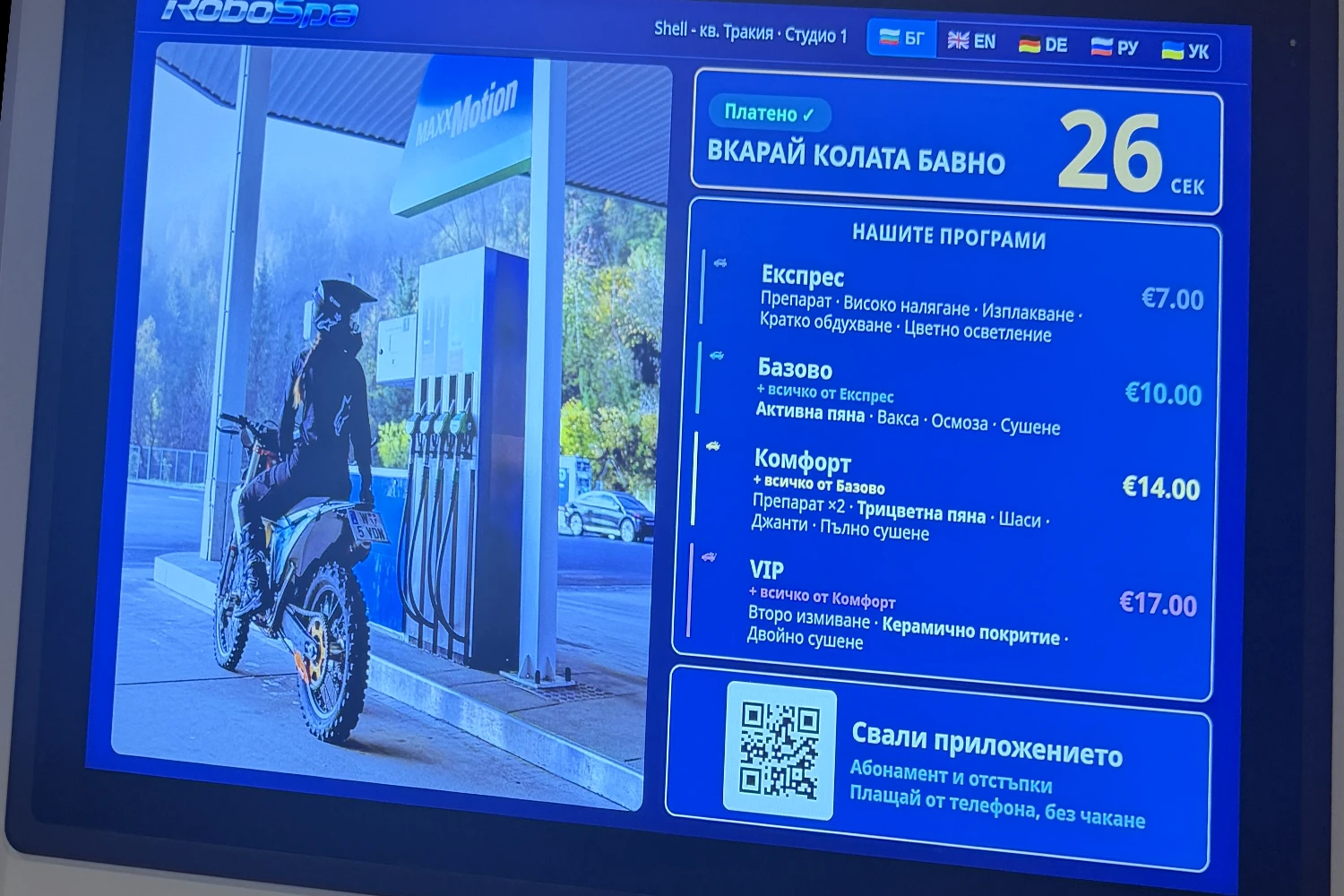
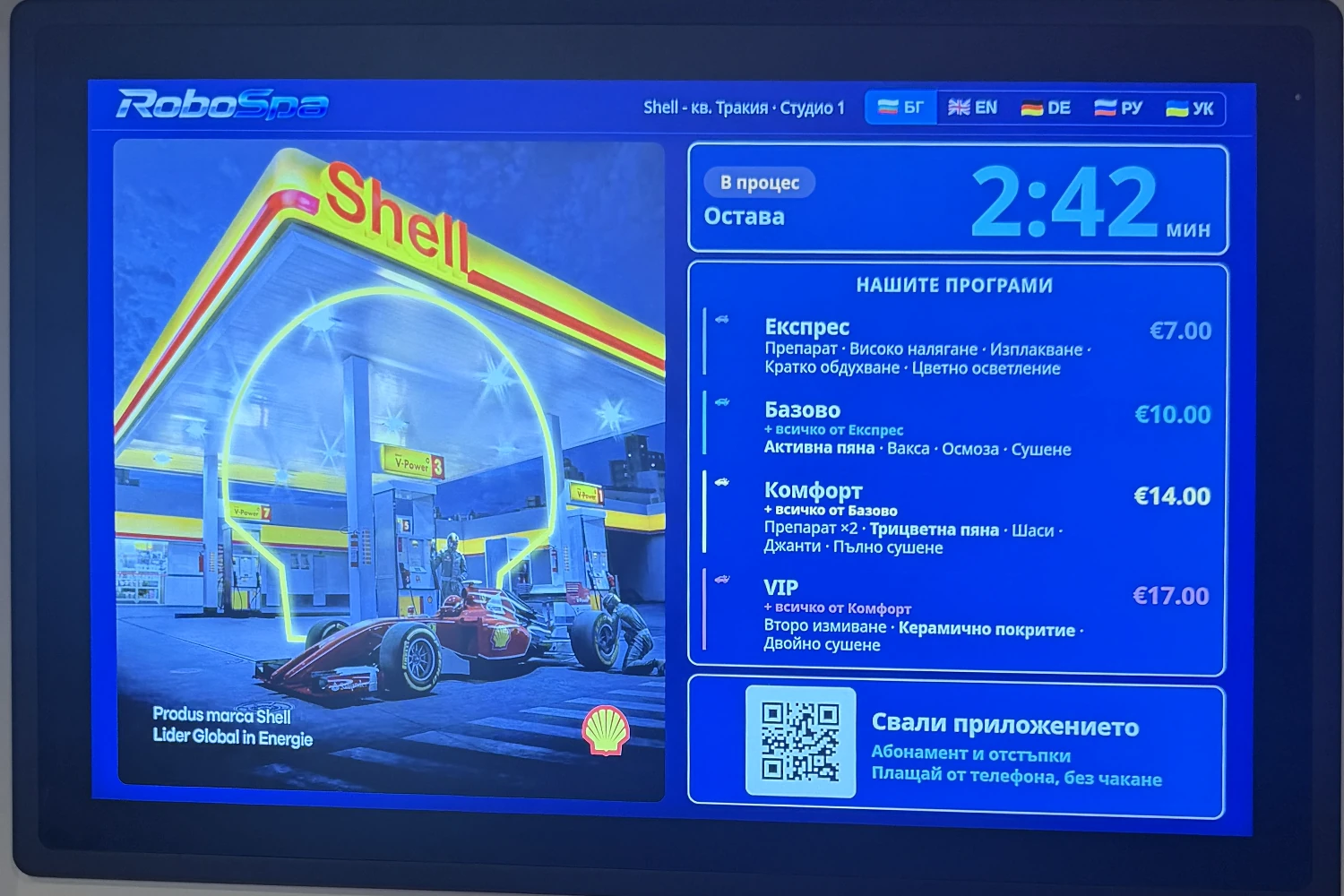
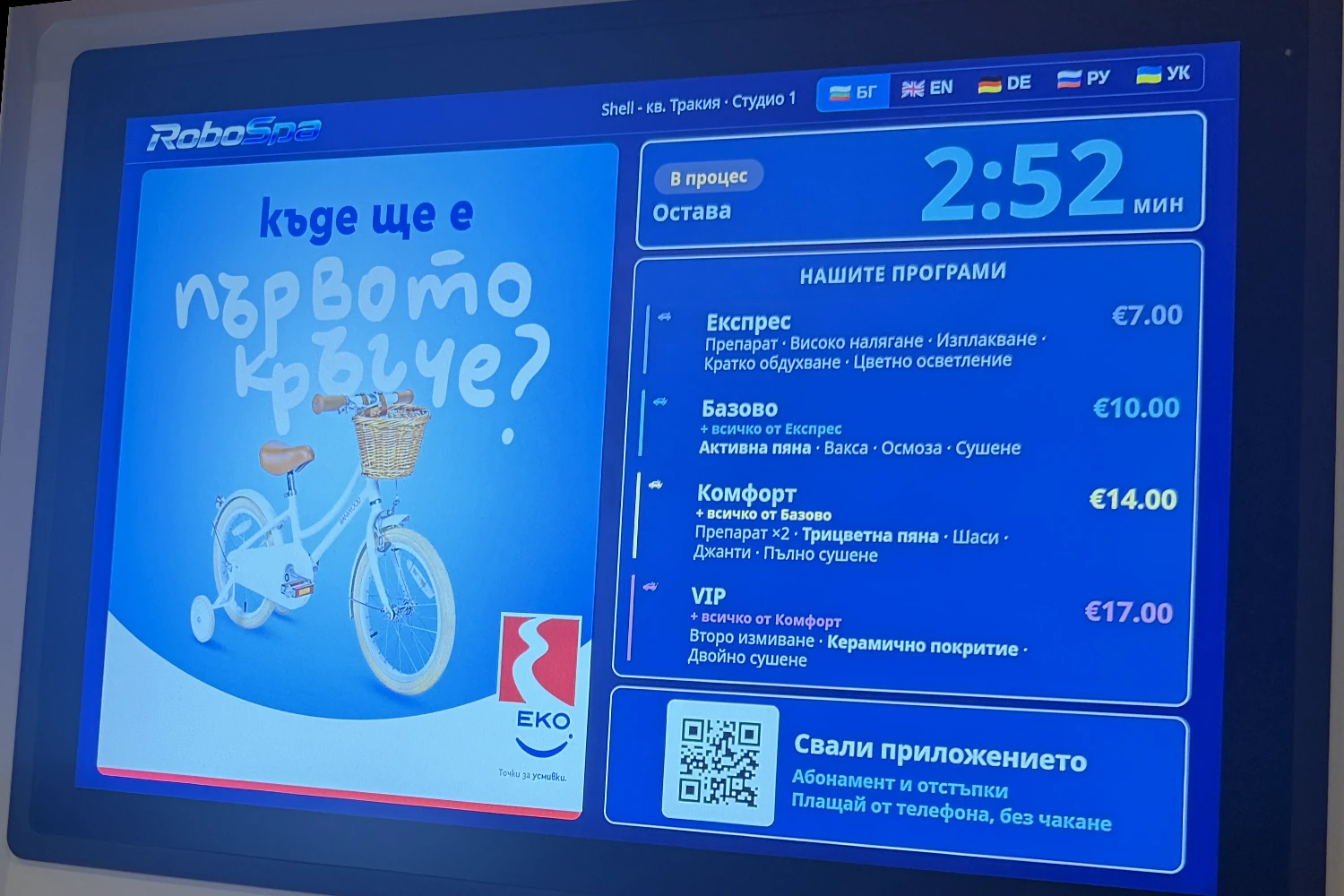
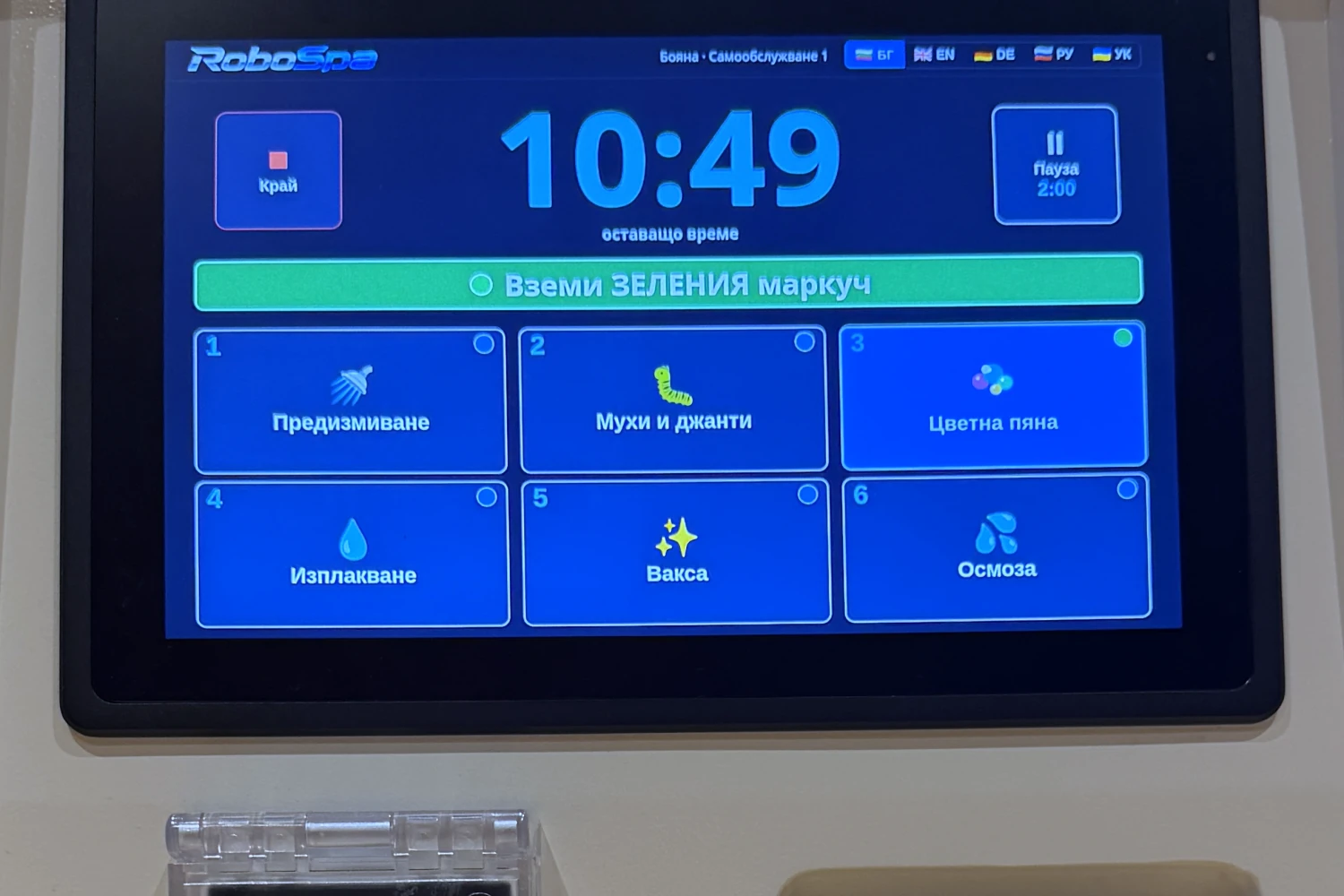
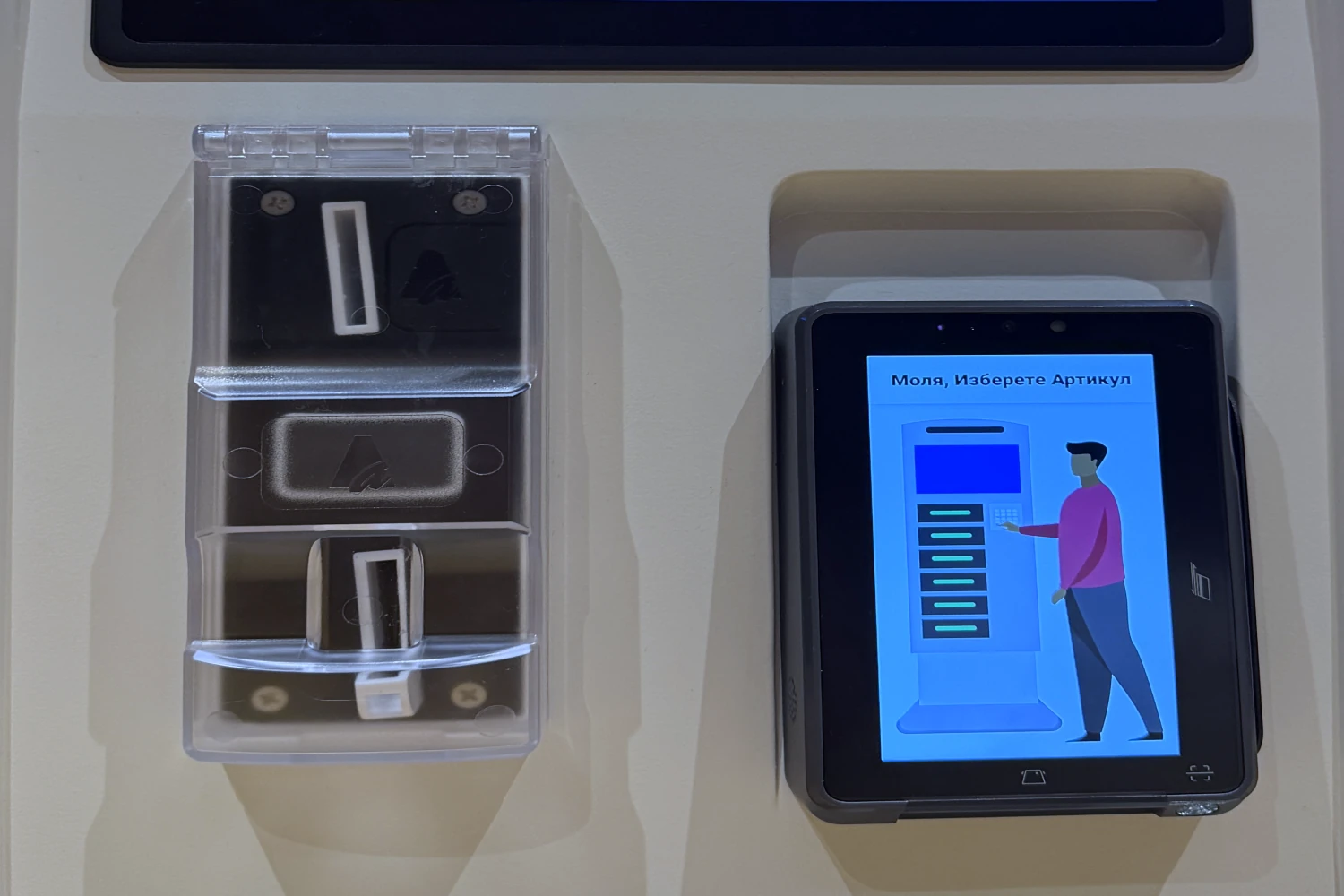
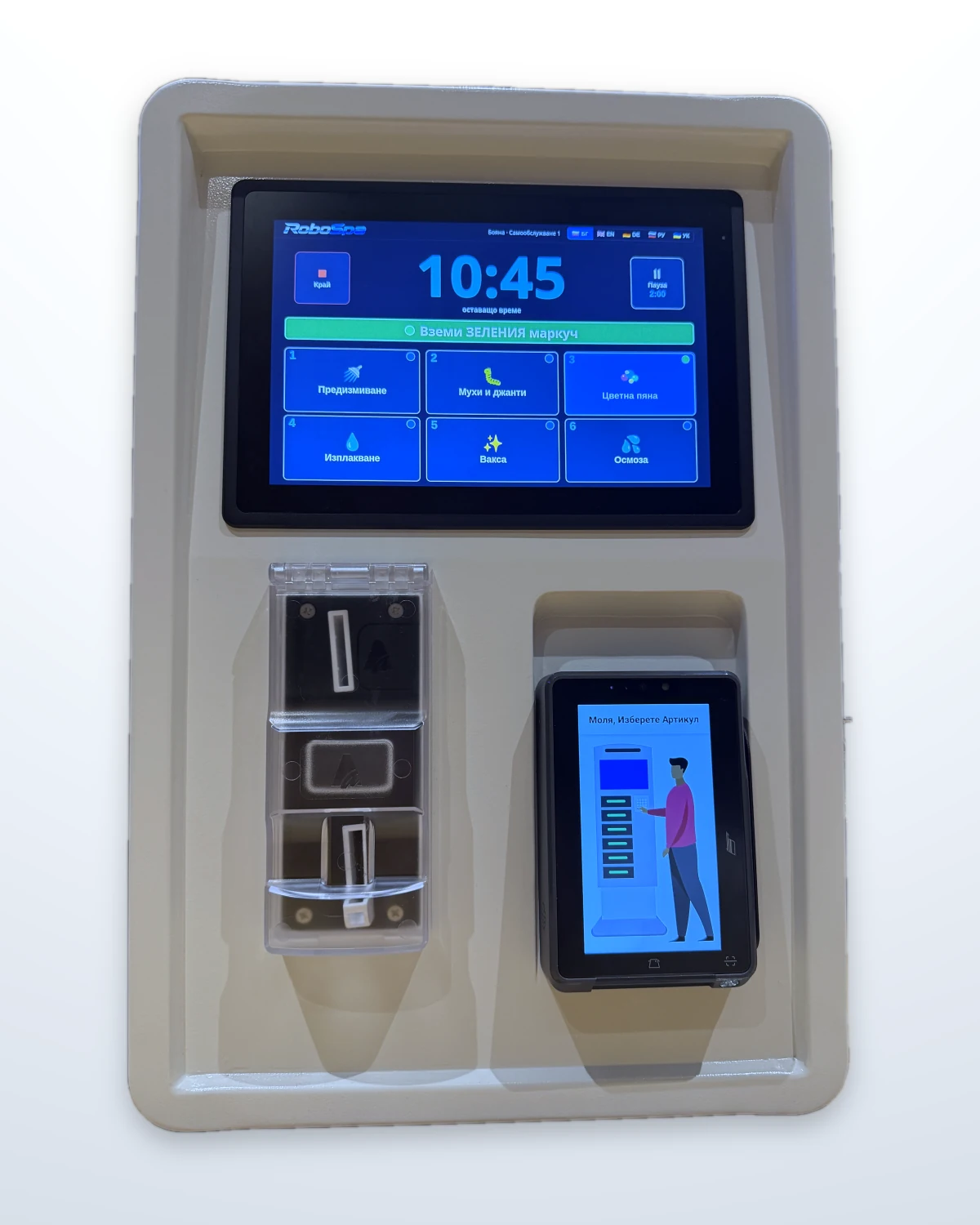
The prices as the driver sees them: four programmes, what each includes, and a QR to the app.The same screen in English. The language changes from the bar at the top.And in German — six languages on the terminal, with a new one added without a new release.Paid. The terminal counts down while the car drives into the bay.While the machine washes, the time left stays visible — and the slot on the left works for a partner.The same screen, a different advert. Changed from the portal, with nobody driving out.The compact on self-service: time left, pause, and the six functions under a finger.Coin acceptor and POS terminal on the compact. Only the large one takes notes.
Two kinds of bay, two kinds of terminal
Automatic bay
The driver picks a programme and pays; the terminal tells the machine which programme to run and counts down. It drives a touchless gantry, but a brush machine just as well — to the terminal the difference is which input it closes.
Self-service bay
Here you do not pick a programme, you pick time. The customer buys minutes, holds the lance themselves and switches the six functions from the screen. The clock starts on the first function, not on payment.
Worked example
Worked scenarios
A car wash with no till and nobody on site
1
The driver pulls up and sees the four programmes with their prices — Express €7 up to VIP €17 — and what each one includes.
2
They pay by card, by phone or in cash. The large terminal also takes notes and gives change in coins.
3
The terminal starts the programme over the machine's own bus and shows the time left. The screen reads in direct sun — 1000 nits.
4
The wash lands in the site's books immediately. The owner sees it from the portal without driving over.
Self-service, paid by the minute
1
The customer picks an amount on the screen — the more minutes they buy at once, the cheaper the minute gets.
2
The timer starts when they pick the first function, not the moment they pay.
3
Pause stops the clock; the time left stays on the screen in minutes and seconds.
4
If they finish early, the remainder can come back as credit in the app instead of burning.
A subscription recognised at every site
1
The customer buys a monthly plan in the app — not at the site, not through an operator.
2
At the terminal they scan their code and the wash starts without paying again.
3
The camera can recognise the car and offer the programme it bought last time.
4
The washes left this month and the renewal date live in the app.
How it connects
To the machine: Modbus RTU on a LeisuWash 380. On another brand an external-start input is enough — the terminal's relay closes it the way a button would.
To the self-service bay: one relay output per function — detergent, foam, high pressure, rinse, wax, osmosis.
Money: the POS terminal, the coin acceptor and the note acceptor all hang on one MDB bus, and the hopper returns change over ccTalk.
Fiscal: a cash register over a serial port where the law requires one.
230 V power and one network cable — or a mobile connection where the site has no cable.
Frequently asked questions
What is a smart car wash kiosk?
A terminal with a screen, its own computer and a link to the wash machine. It shows the programmes and prices, takes the money, starts the chosen programme and records the wash — with no till and nobody on site.
How many bays does one terminal serve?
On an automatic gantry it is one bay per terminal, because the programme and the time differ for every car. On self-service one terminal can cover several bays where the wiring allows it.
What happens to the cash?
Coins and notes are counted by the terminal itself and show in the portal the same day. The box opens with a key, and the hopper returns change without anyone topping it up by hand every day.
Does the terminal work if the internet drops?
Yes. It charges, starts the programme and keeps the records locally, then pushes them up when the link returns. A site does not stop working because the internet did.
Which wash machine does it drive?
It talks to the machine over the machine's own bus — Modbus RTU on a LeisuWash 380. The same approach carries to another brand as long as it has an external-start input.
What is the lead time?
6–8 weeks from order to a working terminal on site, including reprogramming for the specific case.