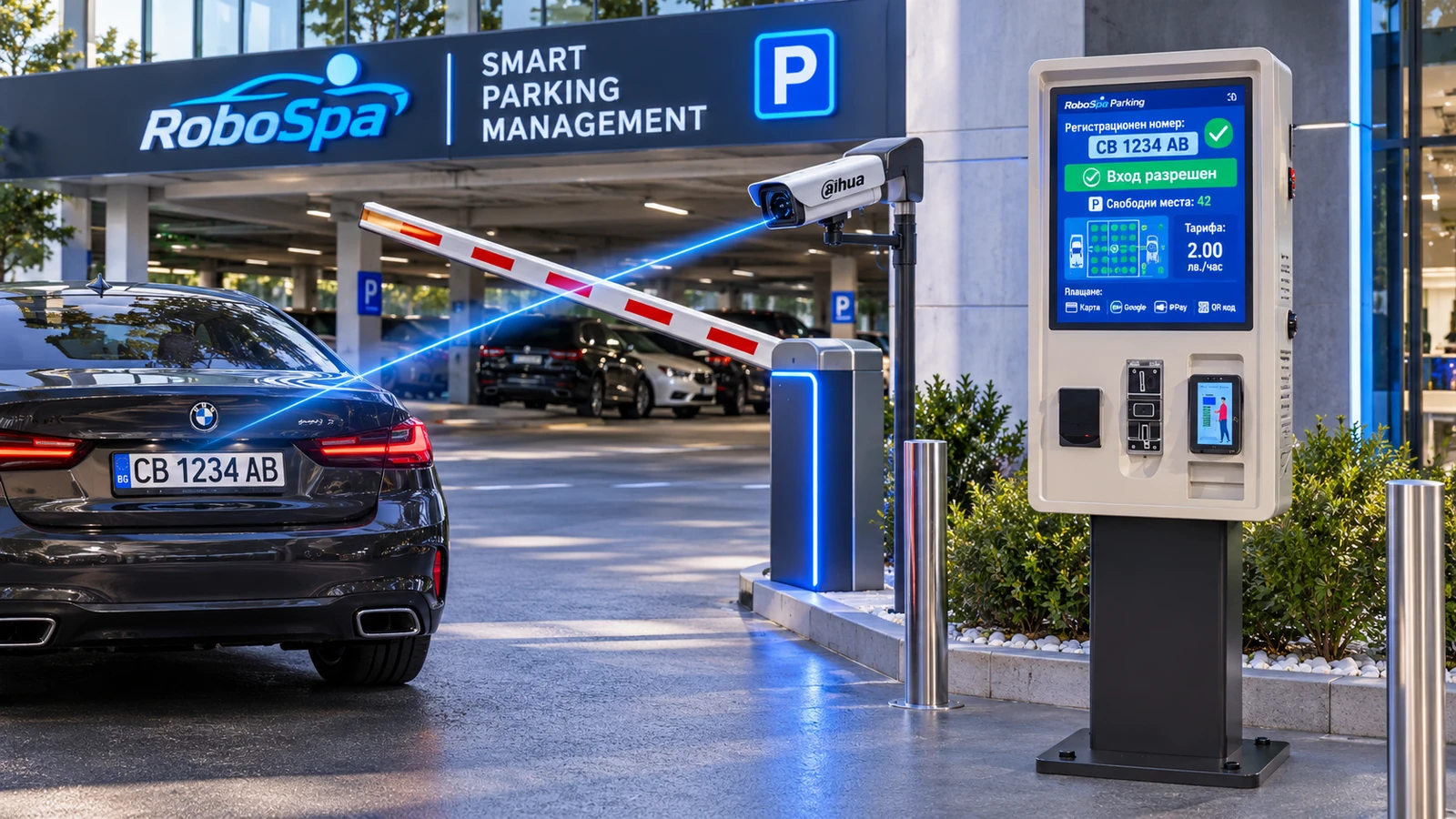
The terminal takes the money and the camera remembers who came in. Subscribers drive through without stopping; a visitor pays by card, coins or a note and gets change. The till, the barrier and the plate list are one thing, not three systems somebody has to reconcile.
The plate is read on the way in and the fee is worked out on the way out. No ticket, no barcode, no lost slip of paper. Season-ticket holders drive through without stopping.
Worked example
Worked scenarios
A monthly permit that renews itself
1
The driver scans the code on the column, picks a monthly plan and pays by card. Their plate joins the list the same minute.
2
Next time in, the camera reads the plate and the barrier lifts without the car stopping. There is no card to forget and no pass to issue.
3
A month later the card is charged automatically. If it is declined, the driver gets a notification and a link to add a new one — nobody walks to a booth.
4
If they stop paying, the plate drops off the list that day and the barrier simply does not lift. Nobody takes a pass back and nobody argues.
A company car park with a cap and one invoice
1
The company gets a portal with its own plates and a monthly cap on hours or spaces.
2
An employee drives in without calling security and without carrying anything.
3
Over the cap the car still gets in, but the hours go on the company account, not out of the driver's pocket.
4
At the end of the month there is one invoice instead of thirty expense claims.
A visitor for an hour and a half
1
The visitor drives in — the camera notes the plate and no ticket is issued.
2
On the way out they type their plate at the terminal and see what they owe and for how long.
3
They pay by card, by phone, with coins or a note, and take change in coins.
4
The barrier lifts, the plate drops off the list, the receipt comes out of the printer.
How it connects
Camera: a Dahua ITC413-PW4D-IZ1 over the network. It pushes the plate itself rather than waiting to be polled — which is why the car does not wait.
Barrier: a dry contact to the external-open input. It works with any barrier that has one.
Free spaces: counted by the camera, or from a loop in the paving if the site already has one.
The plate list lives in the terminal itself and updates from the portal, so the barrier lifts even with the internet down.
Frequently asked questions
What is a smart parking terminal?
A device that merges the till, the barrier and the plate list. It reads plates through a camera, charges for the stay, sells permits and opens the barrier — instead of three separate systems somebody has to reconcile.
Can it replace an existing parking system?
Yes, if the barrier has an external-open input — and nearly every one does. The terminal takes the place of the till and the controller; the barrier and camera stay if they are fit for use.
Does the car park need internet?
Not to operate. The terminal charges, lifts the barrier and keeps records with no link; permits already on the list work offline. The internet is only needed for data to reach the portal and to sell a new permit on the spot.
Which camera reads the plates?
A Dahua ITC413-PW4D-IZ1 licence-plate recognition camera with a motorised lens. It recognises the plate and pushes it out itself rather than waiting to be polled — which is why the car does not wait.
How does it drive the barrier?
With a dry contact — a relay in the terminal closes the barrier's input the way a button would. It works with any barrier that has an external-open input.
What is the lead time?
6–8 weeks from order to a working terminal, including reprogramming for that particular car park.