
Nano-ceramic vs graphene — which one for which car?
Differences, prices, durability, and when it's worth it.
A good coating is the closest thing there is to insurance for your paint. Both nano-ceramic and graphene coatings work on the same basic idea: they bond a thin, transparent, water-hating layer on top of your clear coat. That layer makes water bead up and roll off, takes the first hit from UV, road film and contaminants, and makes the car dramatically easier to keep clean. But ceramic and graphene are not the same thing, and the right choice depends on your car, your colour and how you use it. Here's how they actually differ — and how to decide.
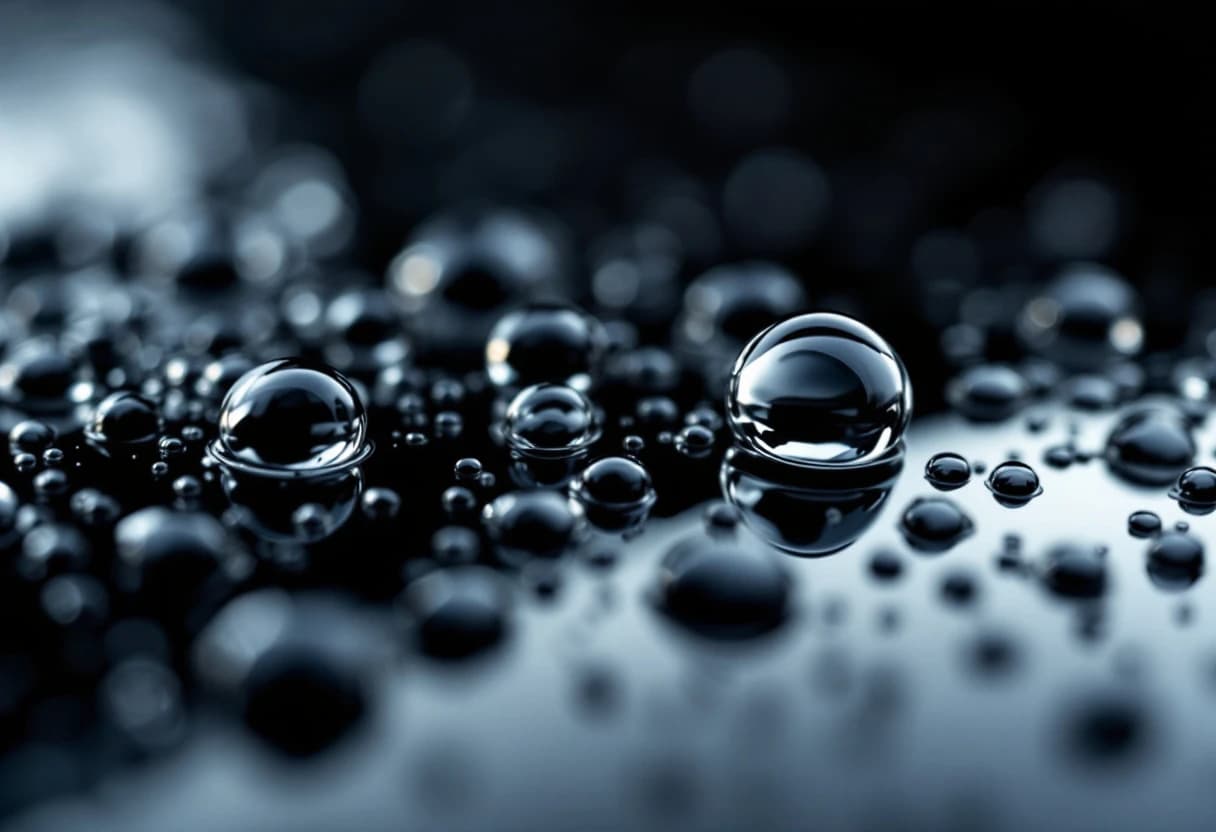
What a coating actually does
It helps to be clear about what a coating is and isn't. It is a sacrificial, hydrophobic top layer that bonds to the clear coat and changes how the surface behaves: water beads instead of sheeting, dirt struggles to stick, and the paint gains a layer of protection against UV fading and light chemical attack. The visible payoff is gloss and that satisfying "water just runs off" effect; the invisible payoff is that contaminants land on the coating instead of directly on your paint, and rinse away more easily.
What a coating is not is body armour. It won't stop a stone chip or undo a scratch from a brush wash. Its job is to repel and protect at the chemical level and to make maintenance easier — which, over time, is exactly what keeps paint looking new.
What "hydrophobic" and "contact angle" actually mean
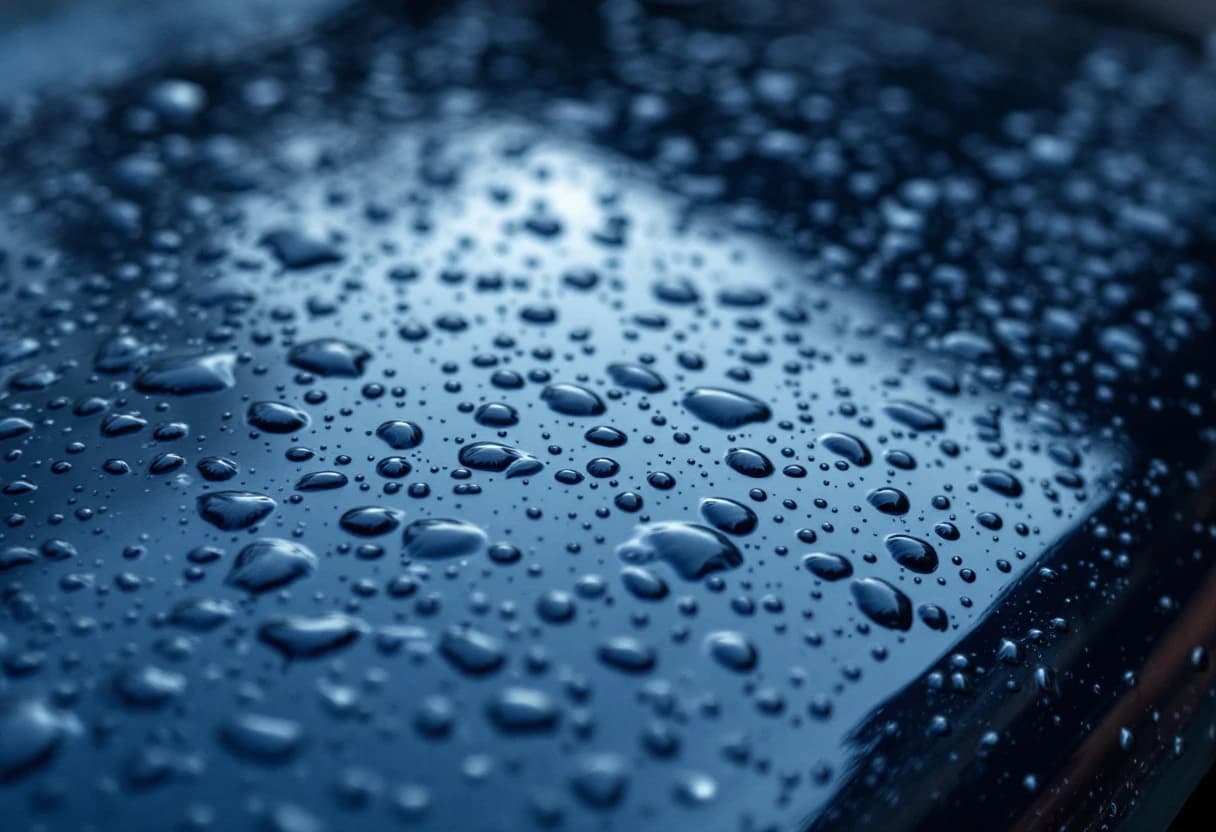
You'll see coatings rated by "contact angle," and it's worth understanding because it's the most honest single number. The contact angle is simply how steeply a water droplet sits on the surface. On bare, uncoated paint, water spreads out into a flatter pool — a low contact angle. On a good coating, water pulls into tight, tall beads — a high contact angle. The higher that angle, the less contact water (and the contaminants dissolved in it) has with your paint, and the more readily it rolls off, carrying dirt with it. That's why a higher contact angle isn't just a party trick: less dwell time for water means fewer water spots and less for grime to cling to.
Nano-ceramic (SiO₂)
Ceramic coatings are built on silica (SiO₂) and have become the default protective layer for everyday cars, for good reason.
- Durability: 2–4 weeks with everyday driving
- Hydrophobicity: contact angle of 105–110°
- Price: €13.99 (RoboSpa Premium)
- Who it's for: daily drivers who want real gloss and easier cleaning without fuss
Ceramic gives you a strong, glassy shine and reliable water beading at a very accessible price. For most people washing regularly, a ceramic layer refreshed every few weeks keeps the car looking consistently sharp and makes each wash more effective, because dirt has less to hold onto. It's the sensible, high-value choice for the majority of cars.
Graphene (graphene oxide)
Graphene coatings, based on graphene oxide, are the newer, higher-performance option — and they solve a couple of ceramic's specific weak points.
- Durability: 4–6 weeks
- Hydrophobicity: contact angle of 115°+
- Heat resistance: up to 250°C — fewer water spots on a hot hood
- Price: €16 (RoboSpa VIP)
- Who it's for: premium cars, metallic paint, and anyone wanting longer-lasting protection
Graphene lasts noticeably longer per application and beads water even more aggressively. Its standout advantage is heat tolerance: because it doesn't trap heat the way silica can, it's less prone to leaving water spots when droplets dry on a hot panel in the sun — a common frustration on dark cars. If your paint is dark, metallic, or simply your pride and joy, graphene's extra durability and cleaner drying are usually worth the small premium.
Head to head: the real differences
Stripped of the marketing, the practical differences come down to three things. Graphene lasts longer between applications — four to six weeks against ceramic's two to four — so it's the better value if you wash less often. Graphene beads more tightly, with a higher contact angle, so water and dirt clear faster. And graphene handles heat better, which mainly shows up as fewer water spots on hot, dark paint. Ceramic, in return, costs a little less and delivers a gloss and protection level that's more than enough for most cars. Neither is "better" in the abstract; they're tuned for different priorities.
Why water spots matter
Water spots are the small, often-overlooked annoyance that graphene specifically targets. When mineral-laden water dries on hot paint, it leaves behind a ring of deposits that can etch into the surface over time. Dark and metallic colours show these spots most clearly, and a hot bonnet in summer is the perfect place for them to form. Graphene's heat resistance means droplets are less likely to bake on before they roll off — which is why it tends to be the recommendation for exactly the cars where spotting is most visible.
Which one for which car
Our recommendation comes down to colour and how much you care about longevity:
- Black, dark and metallic paint → graphene. These finishes show swirls and water spots most, and they benefit most from graphene's tighter beading and heat resistance.
- Lighter colours → ceramic. Light paint hides imperfections better, so ceramic's excellent protection at a lower price is plenty.
- Premium, weekend or low-mileage cars → graphene. If the car is something you want to keep pristine for years, the extra durability pays off.
- High-mileage daily drivers on a budget → ceramic, refreshed often. Frequent, affordable top-ups keep protection continuous.
How coatings fit with touchless washing
A coating and a good wash routine are partners, not alternatives. Because both ceramic and graphene can be applied as part of a normal wash cycle, you don't need a separate detailing appointment — at RoboSpa they're built into the Premium and VIP programs and reapplied as you wash. Crucially, they don't degrade with frequent washing the way you might fear; a touchless, contact-free wash actually preserves the coating, because nothing abrasive is dragging across it. The combination — a contact-free wash refreshing a hydrophobic layer every visit — is what keeps a car genuinely protected rather than just clean for a day.
Is it worth it?
For the price of a couple of coffees added to a wash, a coating buys you easier cleaning, better gloss, and a real protective layer between the world and your clear coat. The value compounds over time: paint that's consistently coated and gently washed holds its finish — and its resale or lease-return value — far better than paint left bare. For a daily car, ceramic is an easy yes. For a car you love or intend to keep, graphene is the small upgrade that pays for itself in how the paint looks years down the line.
How long a coating really lasts
The durability numbers — two to four weeks for ceramic, four to six for graphene — describe a wash-applied coating refreshed as part of your routine, not a one-off professional installation that can last years. That's by design: RoboSpa's coatings are topped up little and often as you wash, so protection stays continuous instead of wearing away to nothing between rare visits. How long any single application holds depends on how much sun, rain and washing it sees, but the practical point is that frequent, light reapplication keeps a car protected far more reliably than one heavy coat you never renew.
What actually wears a coating down
Coatings don't vanish overnight; they erode. The main culprits are UV exposure, harsh alkaline or acidic chemicals, abrasion, and heat. This is the quiet argument for contact-free washing: a brush doesn't just scratch paint, it physically grinds the coating off, undoing the very protection you paid for. Touchless washing, by contrast, refreshes and preserves the layer rather than abrading it. If you want a coating to last, the single most important thing is to stop scrubbing it — which is exactly what a contact-free wash does. (More on that in touchless vs brush car washes.)
Can you layer ceramic and graphene?
A reasonable question, and the short answer is that you don't need to. Each is a complete hydrophobic system on its own; stacking them doesn't double the protection. What does work well is consistency — picking the right coating for your car and reapplying it regularly, so there's always a fresh, intact layer doing its job. Think of it as topping up rather than building up. The benefit comes from never letting the protection lapse, not from piling on layers.
Gloss isn't just vanity
It's easy to dismiss the shine as cosmetic, but gloss is a useful signal. A surface that beads water tightly and reflects cleanly is a surface where contaminants aren't bonding and UV isn't reaching bare clear coat. When the beading starts to flatten and the shine dulls, that's your cue that the coating is wearing and it's time to refresh. In that sense the look isn't separate from the protection — it's the easiest way to see the protection working.
A few common questions
Does a coating replace washing? No — it makes washing easier and more effective, but dirt still has to be removed. Will it fix existing swirl marks? No; a coating sits on top and can even make existing scratches more visible. It prevents new damage, it doesn't undo old. Is it safe on wraps and matte paint? Coatings are formulated for glossy clear coat; matte and wrapped finishes have their own products, so check before applying. Ceramic or graphene if I genuinely can't decide? Go by colour: dark or metallic, graphene; lighter, ceramic. You won't be unhappy with either.
Coating, wax or sealant — what's the difference?
People often lump these together, but they sit on a scale of durability and performance. Traditional carnauba wax gives a warm glow but melts and washes away in a week or two. Synthetic sealants last a bit longer and bead reasonably well. Ceramic and graphene coatings sit at the top: harder, slicker, far more durable, and far more resistant to heat and chemicals. If you've only ever used wax, the jump to a coating is the difference between re-doing it constantly and having protection that actually stays put between washes. For the price difference at a modern wash, there's little reason to choose the weaker option.
What you'll actually notice day to day
Beyond the spec sheet, a coated car changes your routine in small, satisfying ways. Rain sheets off as you drive, so the car often arrives looking half-clean. Bug splatter, tree sap and bird droppings sit on top of the coating instead of etching the paint, so they wipe off instead of staining. Snow and frost clear more easily. And each wash gets quicker and more effective, because there's less for dirt to grip. None of these is dramatic on its own, but together they're the everyday payoff of a hydrophobic layer — the car simply fights dirt for you between visits.
When to refresh, and how to tell
You don't need a calendar to know when a coating needs renewing — the car tells you. The clearest sign is the beading: when water stops pulling into tight beads and starts to sit flat or sheet lazily, the hydrophobic layer is thinning. A surface that suddenly feels rougher to the touch, or holds dirt where it used to shrug it off, is saying the same thing. With a wash-applied coating refreshed on your normal schedule, you rarely reach that point — but it's a useful instinct to have, and a good reason to notice how your paint behaves rather than taking protection for granted.
Does colour really change the answer?
It might seem like marketing to recommend graphene for dark cars and ceramic for light ones, but the physics is real. Dark and metallic paint reflects light in a way that makes every imperfection — swirl, water spot, hologram — jump out, while lighter colours scatter it and hide the same flaws. So the finishes that show problems most are exactly the ones that benefit most from graphene's tighter beading, longer life and heat resistance. On a white or silver car, those same advantages are still there; they're just less visible, which is why ceramic's lower price often makes more sense. The coating choice follows from how forgiving your colour is.
Protection is a habit, not a purchase
The biggest misconception about coatings is treating them as a one-time event — apply once, forget, expect years of protection. Real-world protection comes from rhythm: a hydrophobic layer kept topped up, paired with regular contact-free washing that cleans without stripping it. That's the logic behind building coatings into a wash program rather than selling them as a rare, expensive appointment. A modest layer refreshed every couple of weeks beats a premium coating applied once and slowly worn away. Protecting paint, like most things that last, is about consistency more than intensity.
The bottom line
Ceramic and graphene both protect by adding a hydrophobic, sacrificial layer over your clear coat — the difference is degree. Ceramic delivers excellent gloss and protection at a lower price and is ideal for everyday cars and lighter colours. Graphene lasts longer, beads tighter and resists heat, making it the better fit for dark, metallic and premium paint where water spots and longevity matter most. Either way, the coating does its best work alongside regular, contact-free washing — protect the surface, wash it without touching it, and the finish takes care of itself.
Ready to try it?
5 sites in Sofia, 5 programs, 24/7 at all locations. Your first wash is −20% through the app.
Download the app