
How often should you wash your car in winter?
Salt, slush, and pH balance — protect your paint from the harsh winter environment.
Winter is the season that quietly ages cars faster than any other. The cold itself isn't the problem — it's what we put on the roads to fight it. Road salt and de-icing brine are designed to dissolve ice, and they're very good at it. Unfortunately, the same chemistry that melts ice also accelerates the corrosion of steel and eats away at the protective layers on your paint. A car washed properly through winter can look a decade younger than an identical one that wasn't. This is the case for washing more often when it's cold, not less — and for washing the right way.
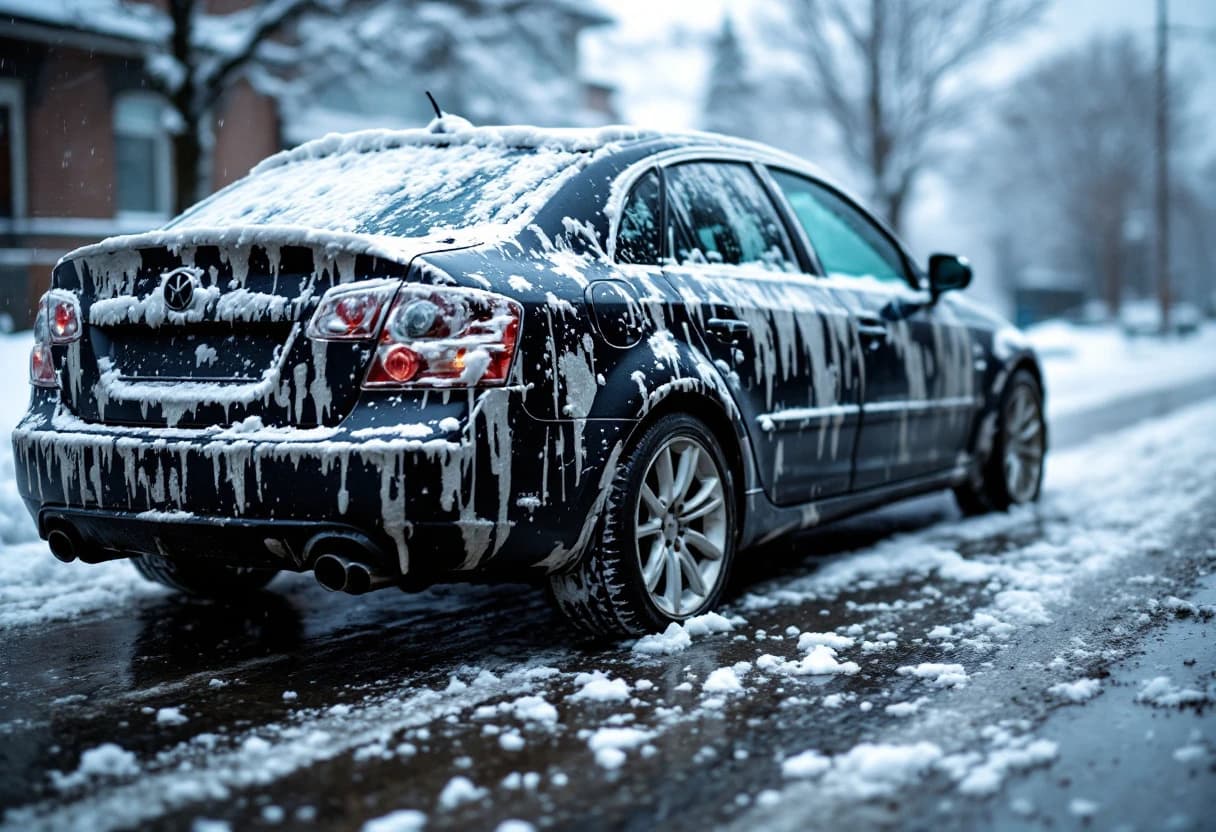
Why road salt is so destructive
Salt works by lowering the freezing point of water, which means a salty film on your car stays liquid at temperatures where clean water would freeze. That liquid brine is an electrolyte — it dramatically speeds up the electrochemical reaction we call rust. Where a dry, clean panel might take years to corrode, a panel coated in damp salt can start in weeks.
It's worse than ordinary dirt for three reasons. First, salt is hygroscopic: it pulls moisture out of the air, so it keeps your car wet even on a dry day. Second, it creeps into every seam, joint and stone chip, reaching the bare metal the paint was meant to protect. Third, it doesn't simply rinse off in the rain the way dust does — it bonds to the surface and needs active washing to remove. Leave it on, and every cold, damp day is another day of corrosion working in the background.
It's not just the paint — it's the metal underneath
The shiny panels you can see are actually the best-protected parts of the car. The real winter damage happens where you can't see it: the underbody, the suspension components, the brake lines, the inside of the wheel arches and the bottoms of the doors. These areas catch a constant spray of salty slush thrown up by the wheels, and they're exactly the places where a small patch of rust turns into a structural problem and an expensive repair.
This is why a winter wash that only does the visible bodywork is doing half the job. Salt sitting on the underbody and in the arches will keep working long after the paint looks clean. Removing it is the single most valuable thing you can do for the long-term health of the car.
How often should you actually wash in winter?
The honest answer is "more often than in summer," and how much more depends on the conditions:
- During active salting and slush — when the roads are being treated heavily and you're driving through brown spray every day — aim for twice a week. It sounds like a lot until you remember what you're protecting.
- In ordinary cold, dry winter conditions — frost but no fresh salt — once a week is enough to keep ahead of the buildup.
- After a specific heavy-salt drive — a long motorway trip on a treated road, for example — a wash within a day or two is worth it regardless of your normal schedule.
The principle is simple: you're not washing to look clean, you're washing to stop salt sitting on metal. The longer it sits, the more it costs you.
The parts that matter most in winter
If you only have time to focus on a few things, focus on these:
- The underbody. Most automatic washes skip it entirely. Look for a wash with a dedicated underbody rinse — RoboSpa's Comfort and VIP programs include one.
- Wheel arches and sills. These trap the most salt and slush. They need direct, high-pressure attention, not just a pass of the main wash.
- Fenders and lower panels. The lowest sections of the bodywork take the heaviest spray and chip most easily, exposing metal.
- Door and window seals. Salt and grit work into rubber seals; rinsing them keeps them supple and stops doors freezing shut.
Why touchless matters even more in winter
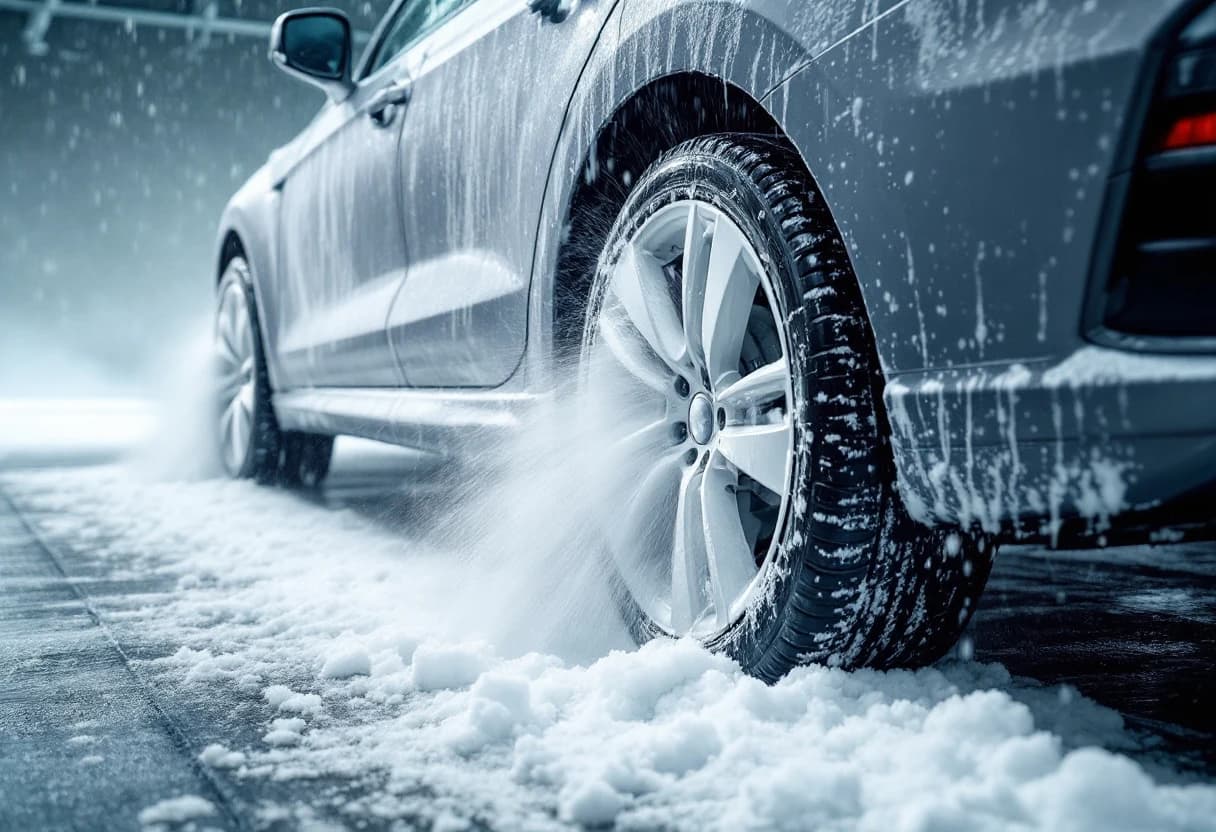
In summer, the argument against brush washes is mostly about swirl marks. In winter, it becomes something sharper. A winter car is covered in grit and hard salt crystals. Drag a spinning brush across that, and you're not just adding fine scratches — you're grinding abrasive crystals into the paint under pressure. It's close to sanding the surface. The dirtier and grittier the car, the more damage a contact wash does.
Touchless washing avoids this completely: high-pressure water and active foam lift the salt and grit away without anything solid touching the paint. In the one season when your car is carrying the most abrasive material it will see all year, contact-free washing isn't a luxury — it's the only sensible choice. (We made the full case in touchless vs brush car washes.)
Drying: the step everyone forgets
Here's the winter trap that catches people out: washing the car and then driving off with it soaking wet in sub-zero temperatures. Water left in door shuts, around locks, on seals and in the wheel arches can freeze — gluing doors shut, jamming locks, and leaving ice in exactly the gaps where it does harm. A wash that ends with the car dripping in freezing air can create new problems even as it solves the salt one.
Proper drying is therefore part of the wash, not an afterthought. RoboSpa bays finish with active drying using filtered air, so your car leaves genuinely dry rather than wet-and-freezing. It's a small detail that makes the difference between a wash that helps and one that hands you a frozen door the next morning.
A simple winter routine
Putting it together, a sensible cold-weather routine looks like this: wash once or twice a week depending on how heavily the roads are being salted; always choose a program that includes the underbody and arches, not just the visible panels; use a touchless wash so the season's grit never gets ground into the paint; and make sure the car is properly dried before you drive away. None of it is complicated — the hard part is just doing it consistently, through the months when it's least tempting to bother.
Making it affordable
The obvious objection to washing twice a week is cost, and it's a fair one if you're paying per wash. That's exactly what subscriptions are for. A Personal Comfort subscription gives you six washes a month at a flat €49 — enough to stay on top of winter without watching the meter every time. When the alternative is paying for corrosion repairs and a tired-looking car in spring, regular winter washing is one of the cheapest forms of protection there is.
The chemistry, in one paragraph
Salt accelerates rust through a process called galvanic corrosion. When salty water bridges two slightly different metals — or even two areas of the same panel at different electrical potential — it acts as a conductor, letting electrons flow and metal dissolve. Add oxygen and warmth, and the reaction runs faster. This is why a damp, salted car parked in a heated garage can actually rust quicker than one left out in the dry cold: warmth and moisture are accelerants. Understanding this makes the advice obvious — get the salt off, and get the car dry. Everything else in a winter routine follows from those two goals.
Snow and ice: the temptation to skip
The hardest part of winter washing is psychological. When it's grey, freezing and the car will be filthy again in a day, washing feels pointless. But "it'll just get dirty again" is exactly backwards: the salt you leave on today is the corrosion you pay for in three years. The dirtier the conditions, the more a wash matters, not less. The trick is to lower the friction — a quick, frequent touchless rinse beats an occasional deep clean, and a subscription removes the "is it worth paying again?" hesitation that makes people skip.
Wheels and brakes take a beating
Winter is brutal on wheels specifically. Brake dust, road salt and grit combine into a corrosive paste that pits alloy wheels and can seize fittings over a season. Wheels also throw the dirtiest spray into the arches, so cleaning them well does double duty. A good wash should hit the wheels and arches with dedicated chemistry and pressure, not just rinse the faces — and it's worth paying attention to whether yours actually does.
Don't carry it inside
Winter grime doesn't stay outside. Salt and slush tracked in on shoes soak into carpets and mats, and the salt that dries there is just as corrosive to the floor pan from the inside as it is from below. Rubber winter mats that you can pull out and rinse are worth their cost, and an occasional interior clean stops the cabin becoming a salt reservoir. A wash routine that only thinks about the outside misses half of where winter does its damage.
A few common winter questions
Is it too cold to wash the car? Not at a proper facility. The problem isn't the wash, it's leaving the car wet afterward — which is why active drying matters. Will washing in winter crack my paint? No; modern paint handles the temperature swing fine. The real risk is leaving water to freeze in gaps and seals. Should I wax or coat before winter? Yes — a hydrophobic layer makes salt easier to rinse off and gives the paint a head start. Is a quick rinse enough, or do I need a full wash? A frequent rinse that includes the underbody beats an occasional full detail; consistency matters more than depth in winter.
Pre-rinse first, scrub never
The right order matters in winter. The first step of any good wash should be a generous pre-rinse with foam to lift and dissolve the salt and loose grit before anything goes near the surface. Skipping the pre-rinse — or worse, taking a brush straight to a salt-caked car — is how scratches happen. A touchless wash builds this in: foam and high-pressure water do the loosening and lifting, so the abrasive winter layer is floated off rather than dragged across the paint. In the dirtiest season, the pre-rinse isn't an optional first step, it's the step that protects everything after it.
Pay attention to where you park
Where the car sits between washes quietly changes how fast salt does its work. A car parked outside in dry, sub-zero air actually corrodes slowly — the moisture is frozen and inert. Bring that same salty car into a warm, humid underground garage and you create the perfect rust conditions: liquid water, salt and warmth together. It's counter-intuitive, but a heated garage can be worse than the cold street if the car goes in dirty and wet. The takeaway isn't to park in the cold; it's to wash and dry before the car spends a night somewhere warm.
Spring is when the bill arrives
Winter damage is a delayed invoice. The corrosion that starts under salt in January doesn't announce itself until spring, when the bubbling paint, the rust blooms around the arches and the dull, etched finish all become visible at once. By then the cause is months gone and the repair is real money. Every winter wash is a small payment against that spring bill — and skipping them is borrowing against the condition of the car at an interest rate you won't like. The cars that look great in April are the ones that were washed in January.
Hand-washing in freezing weather is a losing game
Washing by hand in winter sounds virtuous but is genuinely hard to do well. Buckets of water freeze, hoses stiffen, your hands go numb, and the cold makes you rush exactly the careful steps — the pre-rinse, the frequent mitt-rinsing — that prevent scratches. Worse, water left behind freezes before you can dry it. An automated touchless bay solves all of this: heated, filtered water, real pressure, and active drying, in a few minutes, without you standing in the cold. Winter is the season when the convenience of a good automatic wash stops being a luxury and becomes the only practical way to wash often enough.
The five-minute habit that pays for itself
The single most valuable winter habit is also the simplest: a quick touchless rinse on the way home whenever the roads have been salted. It doesn't need to be a full detail — just enough to flush the fresh salt off the body, arches and underbody before it has days to sit and work. Five minutes, often, beats an hour, rarely. Build it into a route you already drive and it stops being a chore and becomes routine. That habit, more than any single deep clean, is what carries a car through winter with its metal and paint intact.
The bottom line
Winter is when your car needs washing most and gets it least. Salt is relentless, it attacks the metal you can't see as much as the paint you can, and it doesn't stop working until you physically remove it. Wash more often when the roads are salted, insist on the underbody and arches, keep it contact-free so winter grit doesn't scratch, and always drive away dry. Do that, and your car comes out of winter looking and ageing the way it should — instead of paying for the season for years afterward.
Ready to try it?
5 sites in Sofia, 5 programs, 24/7 at all locations. Your first wash is −20% through the app.
Download the app