Wax or ceramic? Which one actually protects the paint
Both make water roll off. The difference is how long they last, how they handle heat, and what you actually get for the money.
On every price list "wax" sits somewhere in the middle and "ceramic" sits at the top. The promise sounds identical either way: water beads up, the car shines, grime struggles to stick. So is the dearer one just the same thing under a better name? It isn't. Wax and a ceramic coating do the same job by completely different means. That doesn't show on wash day. It shows two weeks later.
What any paint protection actually does
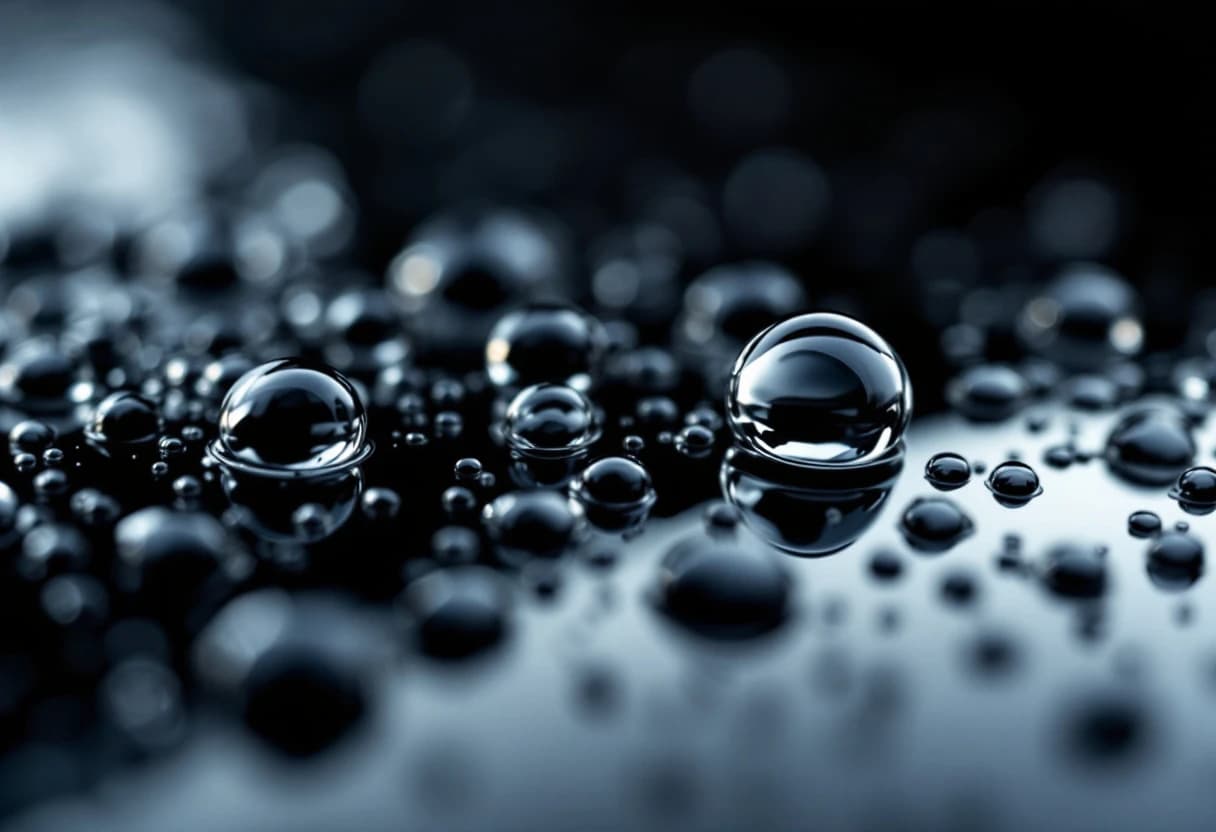
First, what a protective layer does at all. It is sacrificial. It sits on the clear coat and takes what would otherwise reach it: UV, road film, acid rain, dissolved salt. It is also hydrophobic, so water gathers into beads and rolls away instead of spreading flat.
The visible payoff is gloss and that satisfying run-off. The invisible one matters more. Contaminants land on the protection and rinse off from there, instead of etching into the paint.
So far wax and ceramic do the same thing. They part company over how long they last and how they react to heat.
Wax: a layer that sits on top
Wax, classic carnauba or synthetic, sits on the clear coat without bonding to it chemically. That cuts both ways. It applies easily and works straight away: warm, deep glow, and beading from the first minute.
But only physical adhesion holds it there. Heat softens it. Alkaline chemicals strip it. UV wears it down. Wax applied by machine during a wash cycle lasts somewhere between a few days and two weeks. Contact angle runs around 90–100°: water beads, but the beads are flatter and sit on the panel longer.
- Durability: days to about 2 weeks
- Hydrophobicity: contact angle ~90–100°
- Heat resistance: low, softens on a hot bonnet
- Gloss: warm, soft, deep
- At RoboSpa: already in the Basic program (€10)
Ceramic: a layer that bonds
Nano-ceramic coatings are built on silica (SiO₂), and they don't merely sit on top. They bond to the clear coat and form a hard, slick, transparent layer. The gloss comes out sharper and cooler, the beads are tighter, and the protection doesn't fold during the first hot week.
- Durability: 2–4 weeks with daily driving
- Hydrophobicity: contact angle 105–110°
- Heat resistance: high, up to around 250°C, noticeably fewer water spots
- Gloss: sharp, glassy, reflective
- At RoboSpa: the VIP program (€16) — the board calls it “ceramic wax”
Put simply: wax has an excellent first week. Ceramic has a solid month.
The hybrids: wax with ceramic behaviour
The line between the two stopped being sharp a long time ago. Car-care chemistry sells hybrids — waxes carrying silica components, applied as easily as wax but behaving closer to a coating. Belgian manufacturer Nerta names its version exactly that: Hydro Ceramic Wax, "an innovative new kind of wax with ceramic characteristics" in the maker's own words.
The benefits it lists hold for the hybrid class generally: deep gloss and shine, a better drying result, and a protective layer against UV and oxidation, resistance to acid rain damage, strong hydrophobic beading, less static dirt and mud adhesion. Meaning the car stays cleaner for longer.
Stop on "better drying result" for a moment. It sounds like a footnote. It isn't. The faster and more completely water leaves the panel, the fewer minerals are left drying on it, and the fewer spots you find at the end.
The video below compares precisely that: a hydro-ceramic wax against an ordinary one, on the same panels. Watch the water, not the shine. How tight the beads are, and how much liquid remains once it has drained.
We owe you the caveat too. The clip is the manufacturer's, about its own product, not an independent test, and Nerta is not one of our suppliers, at least for now. Its value is in what it shows you, not in what it measures.
Contact angle: the one number worth understanding
"Contact angle" is the most honest single number in the whole topic, so it's worth knowing what it means. It describes how steeply a droplet sits on the surface.
On bare paint, water spreads into a flat puddle. On wax it gathers. On ceramic it stands in tall, almost spherical beads that move at the slightest tilt.
The benefit is entirely practical. The higher the angle, the less contact water has with your paint, and minerals, salt and dirt all travel with that water. The faster it leaves, the more it takes with it.
Heat and water spots
The gap bites hardest in summer. Mineral-rich water dried onto a hot panel leaves a ring of deposits. On dark and metallic colours the spot reads from the far side of the car park, and given time it can etch into the clear coat.
Wax softens at high temperature and lets water linger. So it performs worst on the hot bonnet, the panel everyone looks at. Ceramic takes the heat, stays slick, and the water is gone before it can dry.
Black, dark grey or metallic, parked in the sun? That's the only argument you need.
Head to head
Take the marketing out and this is what's left. Ceramic lasts roughly twice as long between applications. It beads tighter and clears water faster. It tolerates heat, where wax doesn't. In return wax costs less and gives a warmer, softer glow that plenty of people prefer to ceramic's glassy look.
There's no "better" in the abstract. Wax is a good deal if you wash often and like that particular shine. Ceramic is the good deal if you wash every two or three weeks and want the protection still working on the last day before the next visit.
Which one for which car
- Black, dark or metallic paint → ceramic. These colours show water spots and swirls most clearly and gain the most from tight beading and heat tolerance.
- Lighter colours, washed regularly → wax. Light paint is more forgiving, and if you come through every week, wax never gets old enough for it to show.
- A car parked outdoors → ceramic. UV and hot panels are exactly the conditions where wax gives up first.
- A car washed infrequently → ceramic. The rarer the washes, the more it matters that the protection survives until the next one.
- A car you're keeping for years → ceramic. Here you're not saving four euros, you're preserving a finish that shows up later in the resale price.
Both depend on one thing: not being scrubbed
The fastest way to pay for protection and get nothing is to scrub it off. Spinning brushes don't merely scratch the clear coat. They wear away the layer you just paid for.
So wax and ceramic alike only make sense with touchless washing. Nothing hard touches the surface, the layer stays intact, and it gets topped up at every wash instead of being stripped. We've written the mechanics up in touchless versus brush car washes.
That's also where the durability figures in weeks rather than years come from. We're talking about protection the machine applies during a normal cycle and renews at every visit, not a one-off detail costing several hundred euros. Different logic: a little, often, so the protection never drops to zero.
What about graphene and “real” coatings?
You'll also meet graphene coatings: same family, but graphene-oxide-based, with a higher contact angle still (115°+), better heat tolerance and a longer life. Together with professional ceramic coatings they are the next rung up — applied in a detailing studio, taking hours and costing hundreds of euros, but lasting years.
We don't offer those, and we won't pretend otherwise. Our VIP program is a ceramic wax: the hybrid from the section above, applied in minutes during the wash and renewed at every visit. Different logic, different price. If your car is dark or metallic and you drive it daily, a ceramic wax topped up regularly usually does more for you than a one-off coating nobody maintains afterwards.
Common questions
Does wax harm the paint? No. It just doesn't last long. Can I put ceramic over wax? Not a good idea. The wax stands between the clear coat and the coating and stops the ceramic bonding. That's why the ceramic program washes more aggressively before applying. Will ceramic remove existing scratches? No. It sits on top and can even make old scratches more visible. It prevents new damage, it doesn't repair old damage. Is wax worth it in winter? Yes, any hydrophobic layer makes salt easier to rinse away. Ceramic simply lasts the whole season, while wax wants renewing more often; more on that in how often to wash the car in winter. Is it safe on wrap or matte paint? These products are formulated for gloss clear coat. Matte and wrapped surfaces have their own chemistry, so ask before applying.
The bottom line
Wax and ceramic are not the same thing under different labels. Wax sits on the paint and does a fine job while it's there. The trouble is that it isn't there long. Ceramic bonds to the clear coat, handles heat, and is still working on day fourteen.
Between Basic (€10) and VIP (€16) there's six euros, and that covers more than the ceramic wax: a second wash pass, a double rinse and extended drying come with it. Light-coloured car that comes through every week? Wax does the job. Dark car parked outdoors, or simply a car you care about? Ceramic.
Ready to try it?
5 sites in Sofia, 5 programs, 24/7 at all locations. Your first wash is −20% through the app.
Download the app